In 2026, How Many Publications for Residency? (By Specialty)
How many publications do you need for residency? See 2026 research item averages by specialty and how they’ve changed since 2020.


Did ophthalmology just become the most competitive specialty in medicine?
With a jaw-dropping average Step 2 CK score of 258, it must be, right?
Let’s start with the number that’s grabbing everyone’s attention.
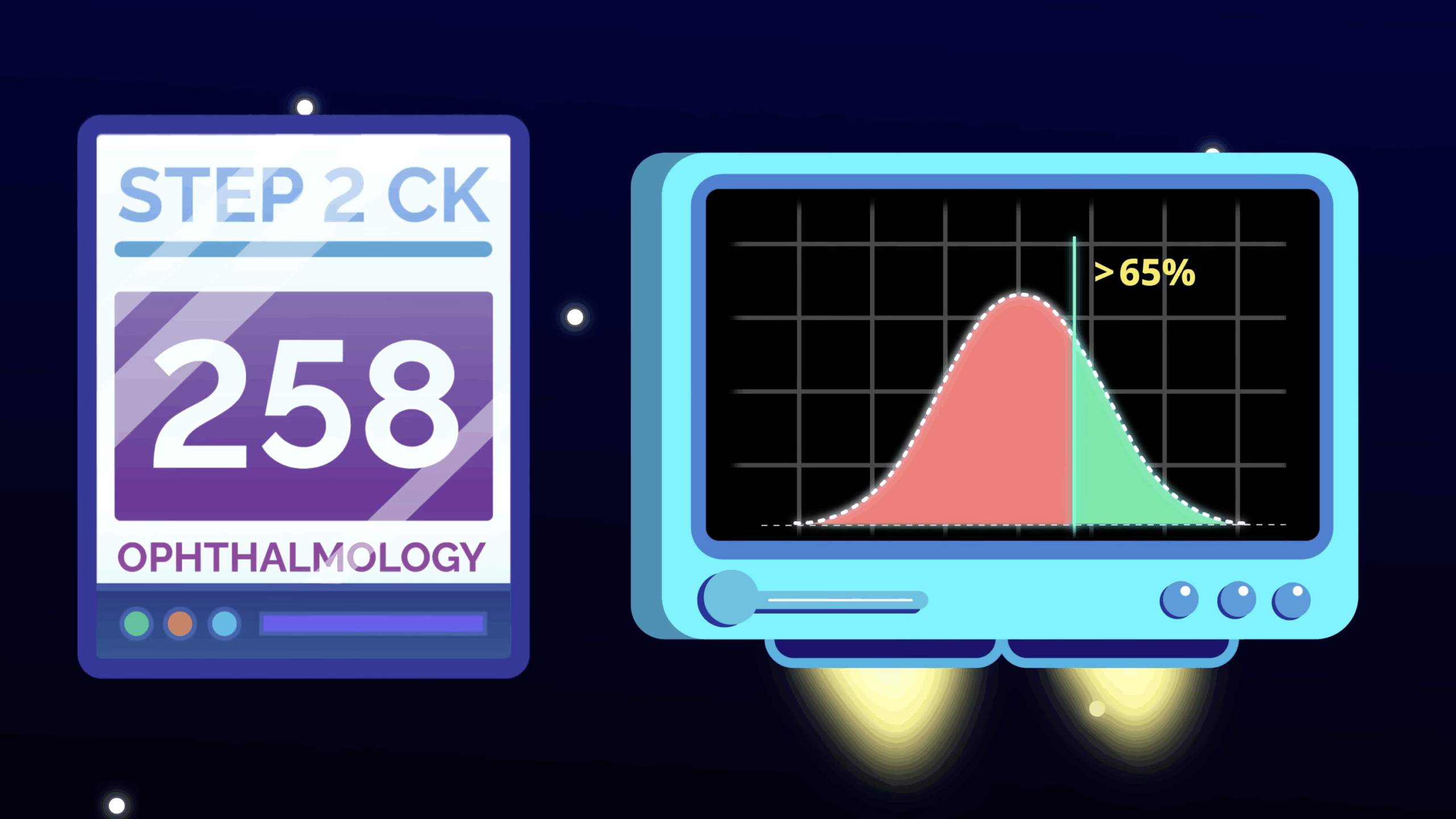
Ophthalmology’s 258 Step 2 CK average currently beats every other specialty.
Dermatology and orthopedic surgery both sit at 257. Plastic surgery has 256. A 258 puts you above the 65th percentile of all test-takers, and no specialty has ever had an average score this high. But before you declare ophthalmology the new king of competitiveness, there’s something you need to understand about the data.
Ophthalmology uses the SF Match, not the main NRMP Match system. We’re comparing 2025 ophthalmology data to 2024 numbers for every other specialty. Other top specialties could reach 258 or higher when new data from the 2026 Charting Outcomes applicant survey is released, since scores typically creep up year after year.
But there’s much more to the story beyond Step scores.
Let’s talk about research—where ophthalmology’s competitiveness argument completely falls apart.
Successful ophthalmology applicants average 7.3 research items each. Now let’s look at the averages for the truly competitive specialties.
Successful neurosurgery applicants come in with an average of 37.4 research items. That’s more than nine abstracts, presentations, and publications per year of medical school. Plastic surgery isn’t far behind at 34.7, while dermatology sits at 27.7, and orthopedic surgery at 23.8.
Think about that gap. Neurosurgery applicants average five times more research items than ophthalmology applicants.
This matters because research isn’t just another box to check. It represents years of sustained academic commitment. You can cram for Step 2 CK and potentially boost your score, but you can’t fake four years of research productivity.
And research is just one area where ophthalmology lags behind. The other metrics tell a similar story.
Back when I was applying to residency, a classmate constantly bragged that ophthalmology was the most competitive specialty.
Her proof was that the overall match rate was around 60%—supposedly the lowest of any specialty. She’d bring this up at every opportunity, wearing it like a badge of honor.
The problem was that she was using the overall match rate, which included international medical graduates who face dramatically different odds. And when we talk about match rates for other specialties, we never talk about the overall match rate, but rather the match rate for US medical students.
Each specialty has a different percentage of students applying who are US MD versus US DO versus FMGs and IMGs. The number of FMGs or IMGs varies considerably between specialties, which is why it’s necessary to exclude international applicants for an objective analysis.
When looking at only US MD seniors, ophthalmology’s match rate was around or over 90% at the time. Meanwhile, top-tier competitive specialties, like plastic surgery, neurosurgery, and dermatology, had US MD match rates in the 70s to low 80s.
Fast forward to today, and ophthalmology’s US MD match rate has dropped to 72%, making it genuinely more competitive than it was.
But people still cherry-pick whichever number makes their specialty look toughest.
Everyone’s incentivized to claim their specialty is the most competitive. It validates their career choice. It impresses their peers. But you need to look at all the data, not just the single stat that tells the story you want to hear.
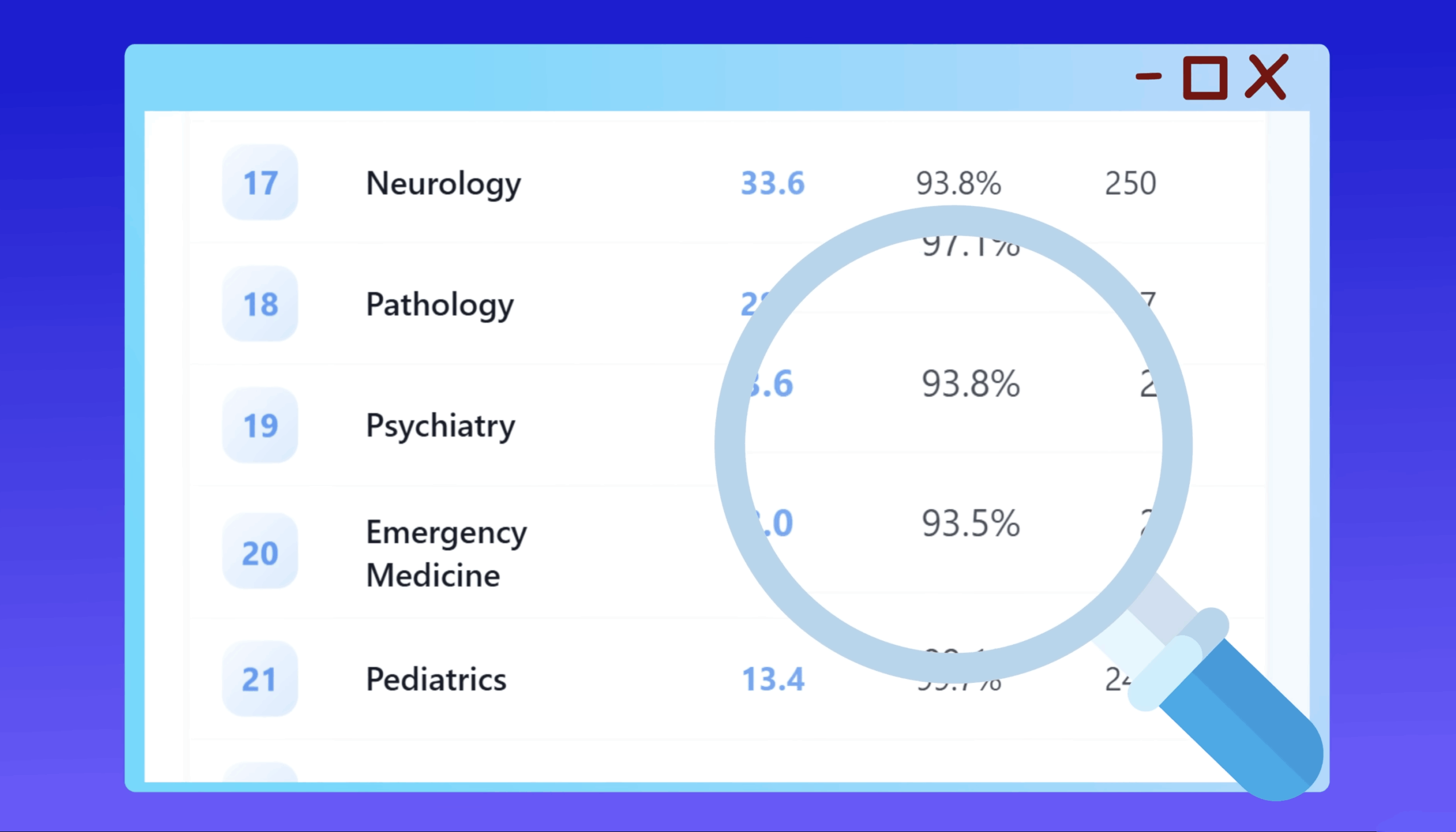
Every year, when new match data is released, we update our Specialty Competitiveness Index. It’s the most comprehensive, data-driven ranking system available—no cherry-picking, no bias, just weighted metrics based on what actually predicts match success.
The index weighs five key factors:
Now, comparing 2025 ophthalmology data to 2024 data from other specialties isn’t perfect. But even if we give ophthalmology every benefit of the doubt—like assuming other specialties’ Step scores won’t increase and ignoring the missing NIH data—ophthalmology still can’t break into the top tier.
Ophthalmology ranks approximately sixth in overall competitiveness.
Competitiveness isn’t determined by a single metric, regardless of how impressive it seems.
Understanding this distinction helps you build a stronger application, regardless of which specialty you’re targeting, because misunderstanding competitiveness leads to poor application strategies.
If you’re banking on a high Step 2 CK score to carry your application by itself, you’re setting yourself up for disappointment. You must objectively assess your competitiveness across all specialties you’re considering.
Want to do just that in a few clicks? The Specialty Predictor shows you exactly where you stand across all specialties based on your complete profile, not just one test score. Head to specialtypredictor.com to access your free specialty competitiveness analysis to see where you stack up against your peers. Do you have what it takes to match into your desired specialty? Find out now.

How many publications do you need for residency? See 2026 research item averages by specialty and how they’ve changed since 2020.

Dermatologist vs Plastic Surgeon: Which is the best career path for you? We break down compensation, lifestyle, training, and the pros and cons of each career.