
Highest-Paid Doctors by Hourly Rate in 2026
Neurosurgeons make $750,000 a year, the highest average salary in medicine. But after accounting for the number of hours worked per week, do they still come out on top?


Are you afraid that a low GPA is killing your chances of becoming a doctor?
Don’t panic. By the end of this post, you’ll know the exact step-by-step strategy to overcome a low GPA and still get accepted to medical school.
While your GPA certainly matters, it’s far from the only factor med schools consider. And if you’re strategic about the proven steps we outline in this post, a lower-than-average GPA doesn’t have to hold you back from your dream of becoming a doctor.
So first, let’s understand why medical schools care so much about your GPA.
Medical schools see most students finish their training in four years—about 8 out of 10 people—and almost everyone graduates within six years, leaving only about 4% who never finish. Every school’s goal is to have zero dropouts, because when a student quits, it’s a lot of money down the drain.
Medical schools are making a huge investment in students, and GPA is a clear, hard metric that shows you’re capable of sustained academic performance.
But here’s what most people don’t realize: your GPA isn’t the only way to demonstrate academic readiness.
So if GPA isn’t everything, what else matters? Well, let’s take a look at the academic readiness formula that admissions committees actually use, which is a combination of two hard metrics: GPA and MCAT.
Together, your GPA and MCAT predict how you’ll handle the rigor of medical school.
The academic readiness formula works like this: A high GPA and high MCAT are ideal. But a high MCAT can offset a low GPA, just as a high GPA can offset a low MCAT. Low scores on both put you in a very tight spot.
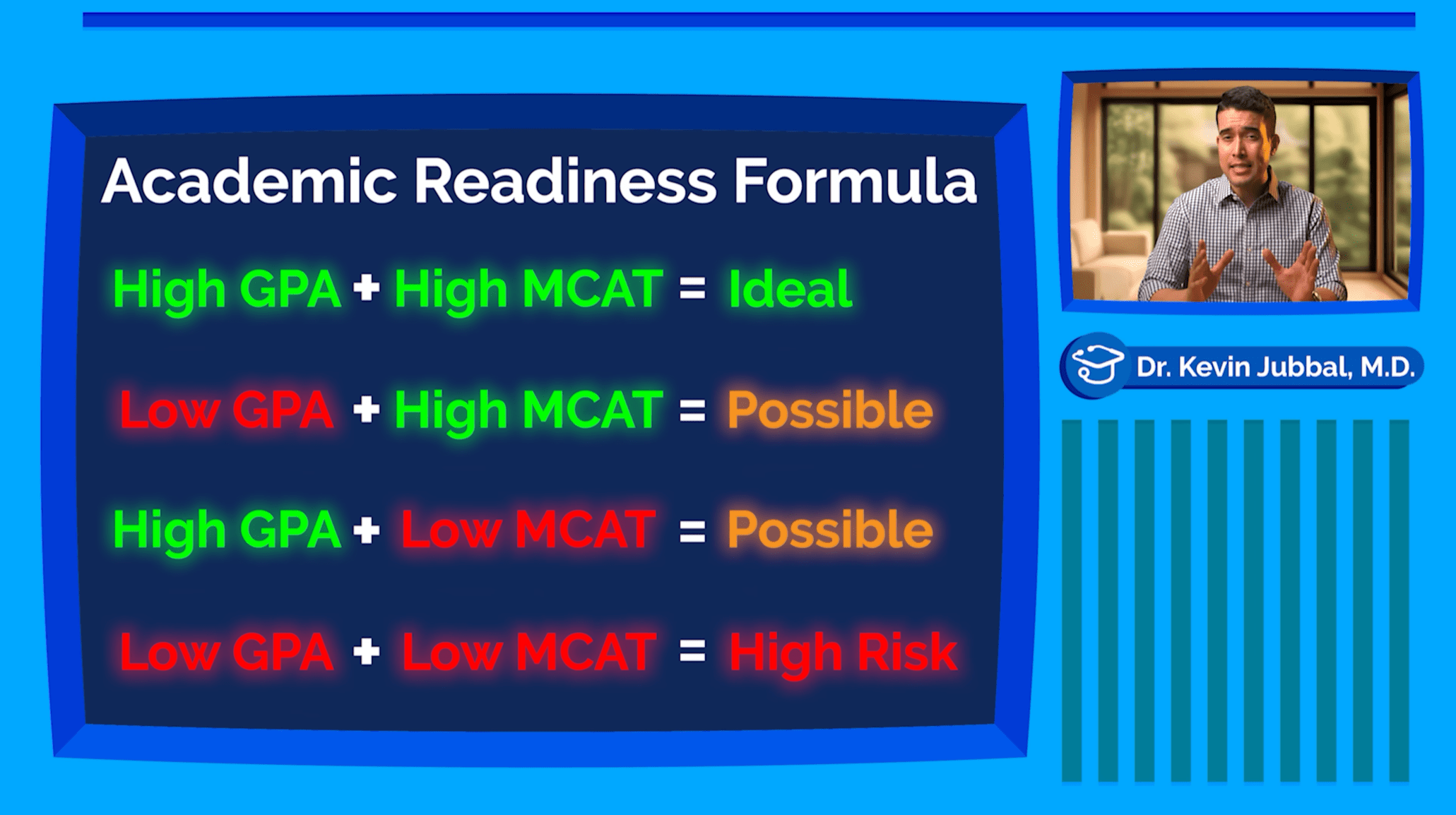
This means, if you haven’t taken the MCAT yet, then the smartest play is to focus on scoring as high as possible.
If you’ve already taken it, it may be beneficial to retake the MCAT to ensure you have a high score that will offset your GPA. However, this decision is complex and highly variable.
Here’s the math you need to work out. If your GPA is below the average of 3.79, aim for an above-average MCAT. The average MCAT for premeds accepted to MD medical schools is around 512, which means you should aim for a 515 or higher.
And vice versa. A below-average MCAT means you need to make that up with a higher-than-average GPA.
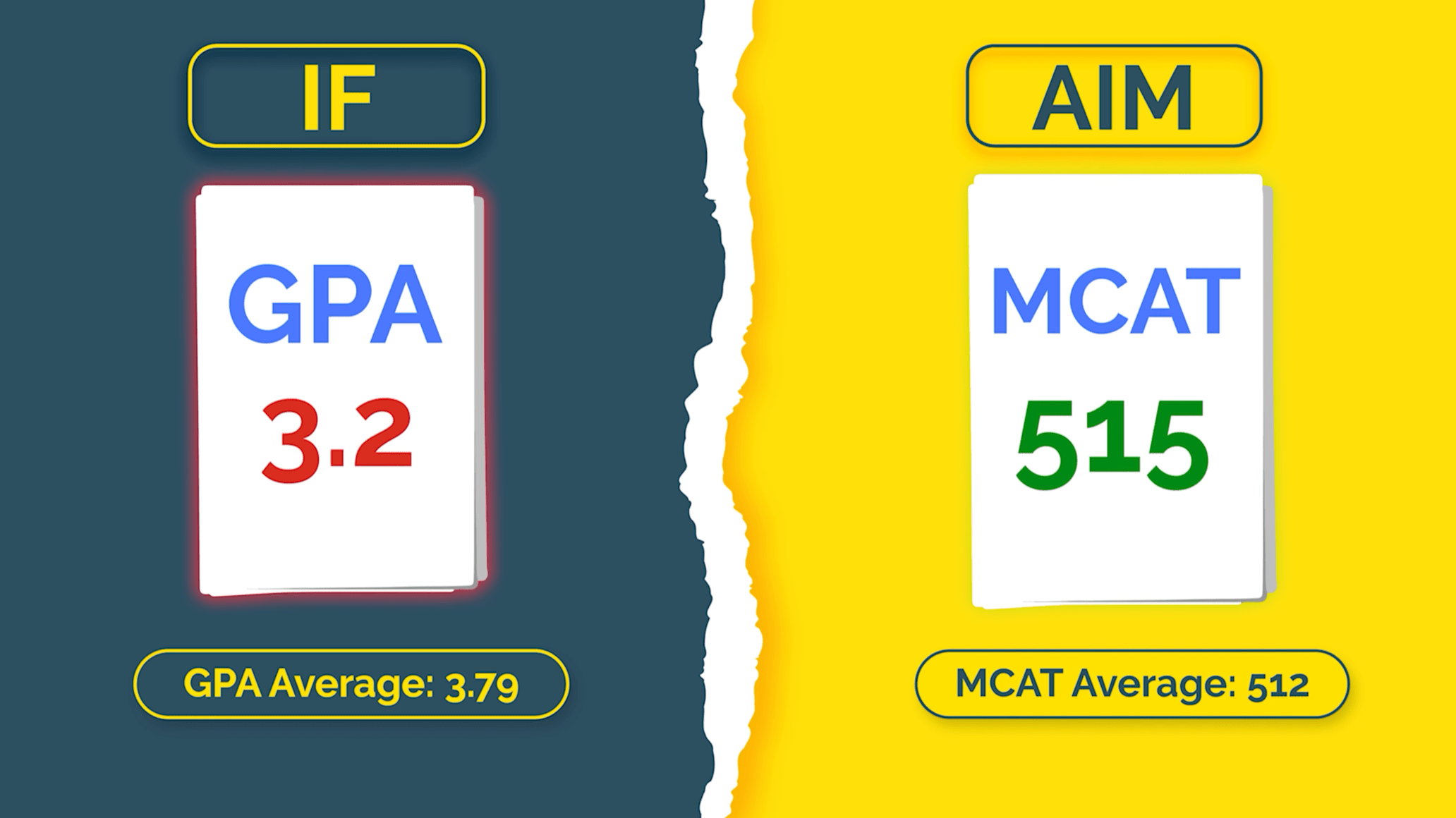
Of course, there are always exceptions to this formula, but when you’re applying to med school, you don’t want to rest your future on hoping you’ll be that very rare exception.
At Med School Insiders, we have hundreds of years of admissions committee experience across our team of physicians. If you’re looking for clarity on navigating the many decisions ahead of you, access a free one-on-one strategic consultation where we apply the framework that separates our 97% acceptance rate from the national average of just above 40%. We’ve helped students with GPAs in the high 2s gain acceptance to MD med schools. With the right strategies, which I’ll share with you today, med school is still within your grasp.
So that’s the MCAT side of the equation. But now let’s get tactical with the other side, because there are several important considerations for strengthening your GPA. The first question every low GPA student asks is: Should I retake any courses to show improvement?
Here’s the exact framework to make that decision.
If you have a D or F in any prerequisite, you must retake it. Period. Medical schools require a C or better in Biology, Chemistry, Organic Chemistry, Physics, Biochemistry, Psychology, Sociology, English, and Math or Statistics. Retaking these shows you can master the material and improve your understanding.

But what about B- or better? Keep it and move forward. The time investment isn’t worth the marginal improvement to your GPA.
C grades are the gray area. Retake only if you need the knowledge foundation for the MCAT, it’s relevant to your major, or you have time before application deadlines. Otherwise, take advanced courses in that subject area instead.
Here are two mistakes to avoid: Don’t audit courses for MCAT prep—use dedicated MCAT resources instead. And don’t retake classes just to “look thorough”, as admissions committees see right through this.
Once you’ve handled retakes, it’s time to face a hard truth about GPA math. But don’t worry—I’ll show you exactly how to work with what you’ve got.
First, let’s calculate your maximum possible GPA. Here’s how:
Step 1: Gather your total credits completed, current GPA, and total credits required for graduation.
Step 2: Use this formula: Your maximum GPA equals your current GPA times credits completed, plus 4.0 times credits remaining, all divided by total credits required.
Step 3: Here’s an example—if you have a 3.2 GPA with 60 credits completed and need 120 total credits, your maximum possible GPA with straight A’s from here on is 3.6.
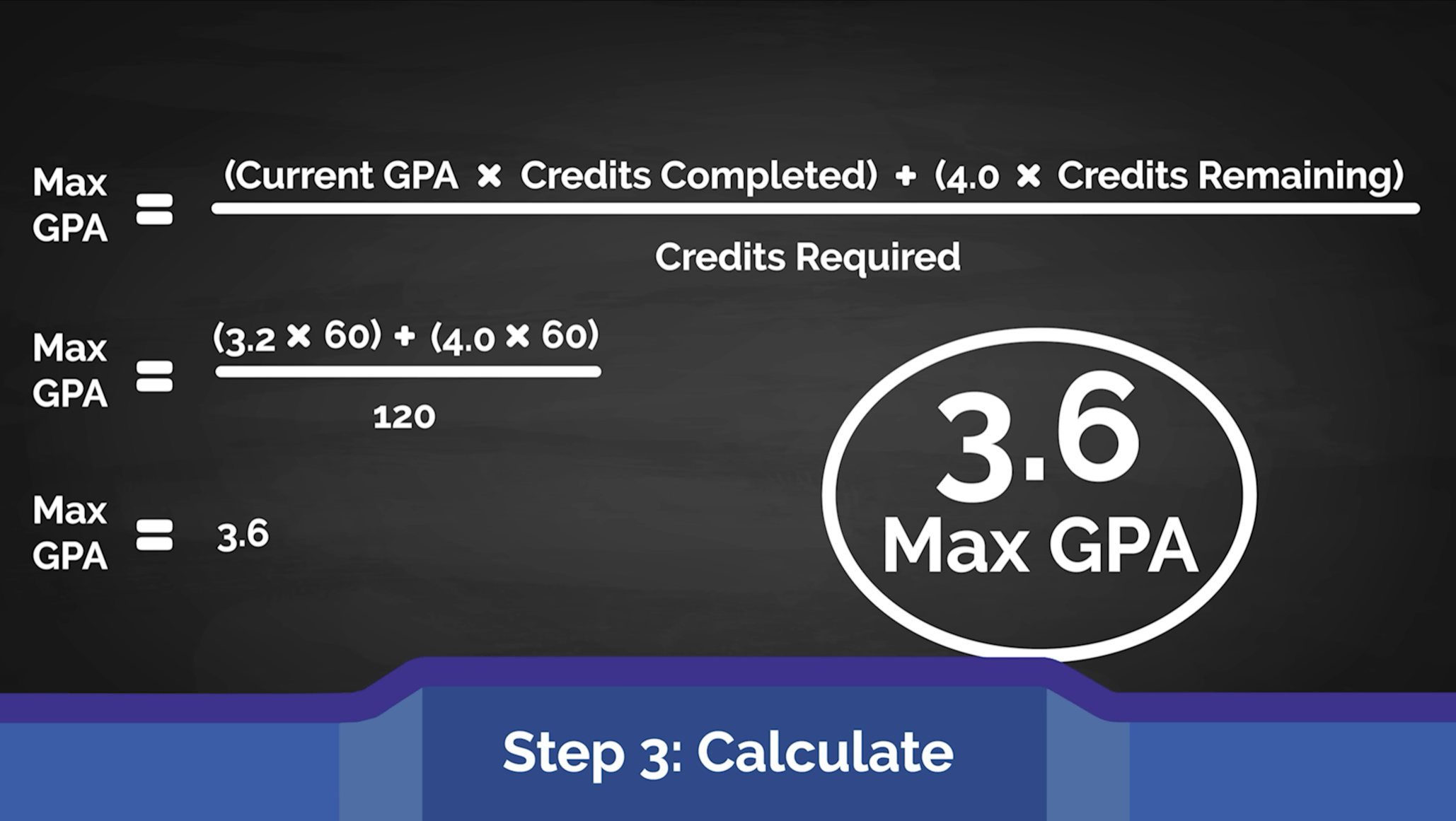
By the way, we created this exact GPA calculator, which you can use for free at premedgpa.com.
So what should you do if your GPA isn’t competitive even with only straight A’s from here on out?
Let’s look at an example.
After 90 credit hours, even straight A’s for 30 credits only raises a 3.0 to a 3.25.
But all GPAs tell a story. Showing an upward trend demonstrates determination and resilience, which is exactly what adcoms want to see.
And here’s some more good news. Medical schools evaluate semester-by-semester performance, with the last two years weighted more heavily than the first two years.
When there’s only so much you can do to improve your GPA, your focus needs to shift from “fixing” it to demonstrating capability in other ways, which we’ll cover shortly.
But first, let’s talk about the benefits of post-bacc programs.
Formal post-bacc programs are structured for career changers and compress prerequisites into 12-18 months. Some have strong track records with affiliated medical schools. Through working with thousands of students, we’ve seen which programs consistently lead to successful acceptances.
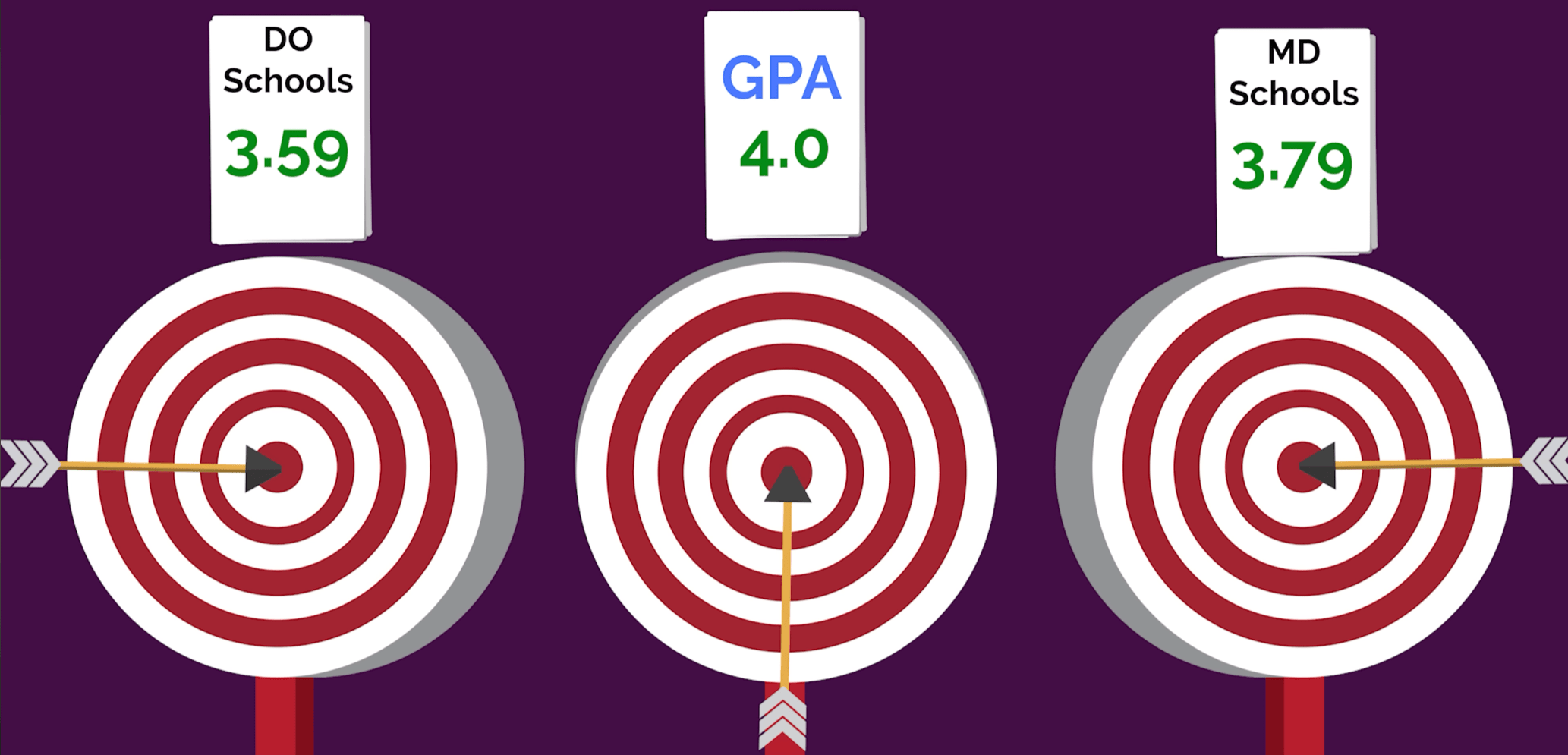
Take these programs seriously. Aim for as close to 4.0 as possible. Your minimum targets are a 3.59 GPA for DO schools and a 3.79 GPA for MD schools.
You can also create your own DIY post-bacc by enrolling as a non-degree student at a four-year university. This provides flexibility and is cost-effective at state universities while maintaining the academic rigor that med schools expect.
Here’s a critical warning: Medical schools view community college courses as less rigorous, and they won’t significantly strengthen your application. If cost is a concern, choose state universities instead.
For your DIY path, if you’ve already completed prerequisites, focus on upper-level sciences like Anatomy, Cell Biology, Histology, Immunology, Molecular Biology, Pathology, and Physiology. This demonstrates you can handle medical school-level material.
Now let’s talk about SMPs, or Special Master’s Programs. These 1 to 2-year programs offer medical school-level coursework. Many are affiliated with medical schools and provide linkage agreements, which can increase your chances of an interview or conditional acceptance.
But here’s the high-risk reality: Poor performance in an SMP can be the nail in the coffin for your application. They’re also expensive and don’t guarantee acceptance, with no viable career path from just an SMP degree. Choose wisely.
So after doing everything you can to raise your GPA, this is how to make all other aspects of your application shine. You want every component to stand out and be so strong that admissions committees can’t ignore you.
Most applicants cover a variety of experiences, including clinical exposure (typically 100-plus hours), volunteering (also typically 100-plus hours), and research, which is becoming increasingly important.
But here’s what separates acceptances from rejections: Your extracurriculars need to tell a cohesive, authentic story. Crafting an application narrative is something we specialize in at Med School Insiders, which is why we’ve helped so many students with low GPAs secure acceptances at top institutions.
Choose research areas that genuinely interest you. When you’re engaged, you perform better, you’re more likely to earn publications and presentations, and you’ll get stronger letters of recommendation.

Research is a superpower extracurricular because it helps you get into both med school and residency, as the research you do in college still counts on your residency application. Research also generates strong letters of recommendation and fosters a greater appreciation for scientific rigor. Plus, schools get grant funding from research, so if you can help them conduct research, it moves the needle on your application because you’re showing that you can earn the school money.
We worked with a student who had a 2.9 GPA but also had incredible drive. After her father’s heart attack, she spent three years developing a community CPR training program that certified over 500 people. That’s the persistence medical schools want to see.
Another student with a 3.1 GPA showed both passion and leadership by turning his love of robotics into a program that teaches prosthetic design to underserved high schoolers. He didn’t just volunteer—he created something new that combined technology with healthcare access.
Both got into medical school because admissions committees saw what grades couldn’t capture: drive, passion, and leadership. The lesson? Your extracurriculars must prove these qualities. Don’t just claim them—demonstrate them consistently.
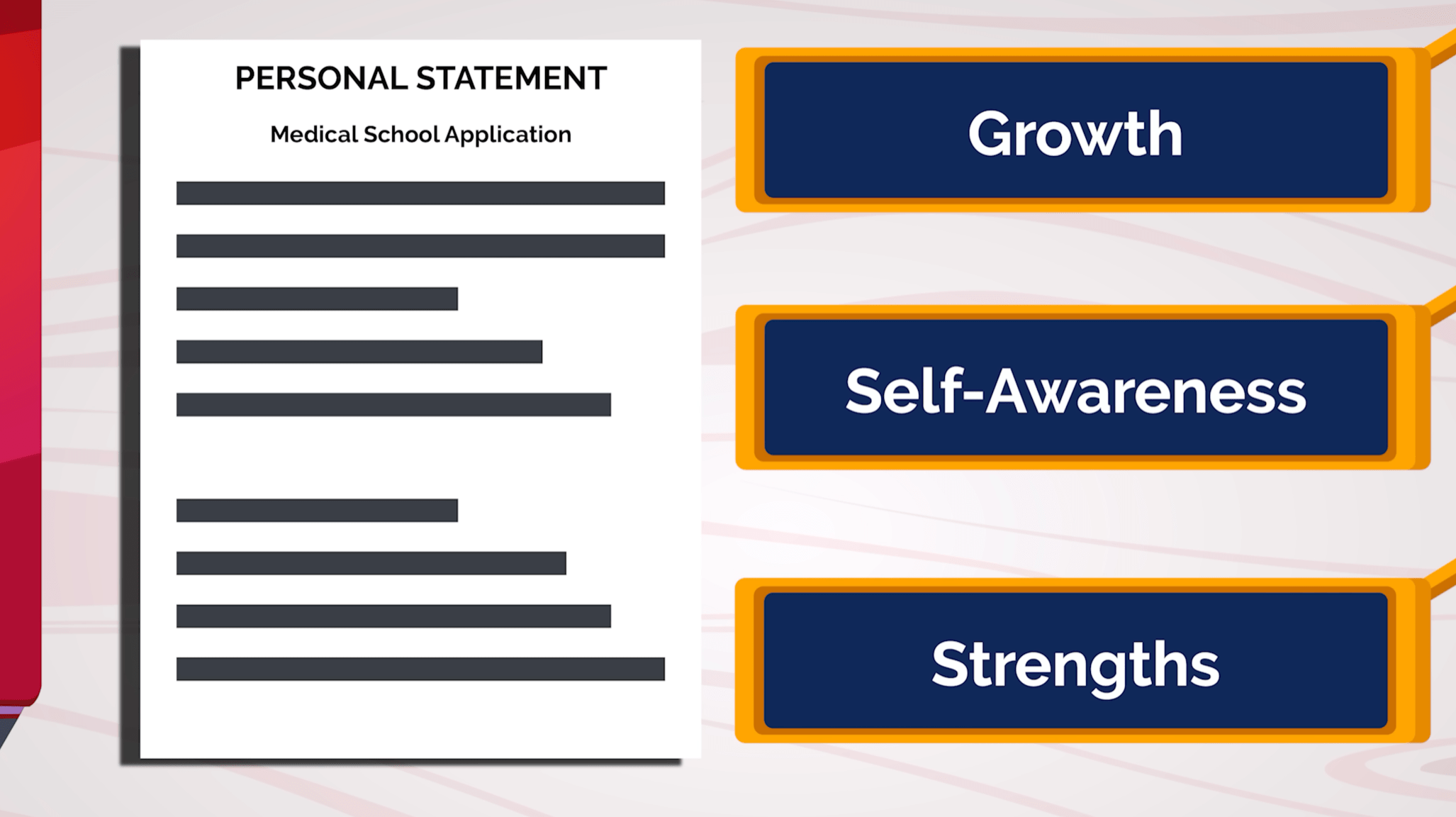
Now for the other high-impact components. Your personal statement needs to explain without excusing, show growth and self-awareness, and connect struggles to strengths.
For letters of recommendation, quality beats the prestige of the writer. Seek writers who can speak to your improvement over time, work ethic, and specific examples of excellence.
Lastly, the storytelling of your secondaries and interview answers is where low-stat applicants can really shine. Practice explaining your unique journey and the challenges you’ve overcome. Demonstrating both growth and maturity is key.
Now for the strategic part that most students mess up—choosing where to apply. Get this wrong, and even a perfect application won’t save you.
For US MD schools, the 2024 average matriculant GPA is 3.79. With a low GPA, target schools with holistic review processes, mission alignment with your background, and lower stat ranges. Check our Med School Chance Predictor for specific schools.

DO schools have a 2024 average matriculant GPA of 3.59, which means they’re more forgiving when it comes to grades.
But understand the limitations. DOs face lower match rates in surgical subspecialties, an additional board exam called COMLEX, OMM and OMT training, which 80% of DOs never use, and a high level of stigma. While we don’t agree with the stigma, denying it doesn’t help anyone. Going DO means added cost, worse clinical rotation experiences, limited exposure to smaller specialties, and worse residency match outcomes.

Now let’s address the elephant in the room—Caribbean schools. While getting in is easier than cutting butter with a knife, securing a residency spot afterward is exponentially harder.
It’s easy now, hard later. Or you can choose hard now, easy later. As Jerzy Gregorek says: “Easy choices, hard life. Hard choices, easy life.”
Your priority hierarchy should be: US MD schools as your number one priority, DO schools as a viable alternative if stats aren’t strong enough for MD—and you can apply to both in the same cycle—and Caribbean shouldn’t even be on your radar.
We’ve gotten students into US schools after they failed 3 separate times on their own. On the 4th attempt with us, they got in. They thought Caribbean was their only option. It’s not.
Many students give up after 1 to 2 application cycles without ever recognizing their blind spots. With proper guidance and strategic adjustments, gaining admission to US schools is achievable.
Here’s the hard truth about creating your school list: Cast a wide net. You’re at a disadvantage, and you know it, so apply very broadly, even to states or cities you don’t initially prefer. The alternative is not getting in anywhere.

Be realistic when crafting your school list. Balance reach, safety, and target schools based on your GPA compared to the most recent matriculant data.
Use the free Medical School Chance Predictor tool to build your strategic school list. Based on the most recent matriculant data, it gives you comprehensive insights beyond the basic statistics you’ll find on other sites.
A low GPA doesn’t have to end your medical school dreams. With strategic course selection, transcript enhancement, compelling extracurriculars, and smart school selection, you can still achieve that acceptance.
Remember, we’ve helped students with GPAs in the high 2.0s get into medical school—including top institutions. The key is being strategic, persistent, and leveraging every opportunity to demonstrate your readiness for medicine beyond just your GPA.
Your journey to becoming a doctor isn’t over—it’s just beginning with a different strategy.
Access our How to Apply to Med School playlist, which dives deeper into each aspect of your med school application that must shine to offset a low GPA.

Neurosurgeons make $750,000 a year, the highest average salary in medicine. But after accounting for the number of hours worked per week, do they still come out on top?

Everything you need to know about going to medical school in Indiana—how to apply, tips for acceptance, and how to decide if Indiana is right for you.






This Post Has One Comment
Hello Dr. Jubbal
Thanks for this really great article !
This make me keep motivated.
Does High School GPA Matter For Applying the Medical School in College ?
I am afraid if them was affecting the medical school admission process on future. Thanks