You’ve opened a blank document dozens of times. You’ve typed a sentence, deleted it, and closed your laptop in frustration. Maybe you’ve even written a few paragraphs, only to realize they sound nothing like you, or worse, they sound exactly like every other premed’s personal statement.
The blank page is paralyzing. You know the medical school personal statement is one of the most critical components of your application, but knowing what it should be doesn’t help when you’re staring at that blinking cursor with no idea where to begin.
Starting is the hardest part. This post is designed to get you unstuck. We’ll show you practical strategies for researching, reflecting, and generating ideas so you can finally move past that blank page and start building your personal statement with confidence.
Personal Statement Overview
Your personal statement is your single best opportunity to make your case directly to the admissions committee. While your GPA demonstrates academic ability and your MCAT shows test-taking skills, neither reveals your character, values, or the experiences that shaped your desire to become a physician.
This is your chance to take control of the narrative. Admissions committees already have your CV and transcripts, so don’t simply rewrite them in paragraph form.
Instead, use this space to show a more multifaceted view of who you are. Highlight the experiences that were instrumental in your path to medicine through storytelling, not a list of accomplishments. Think of your personal statement as your superhero origin story. Share meaningful insights that help readers feel a personal connection with you and understand why you’re not just qualified, but precisely the type of person they want in their program.
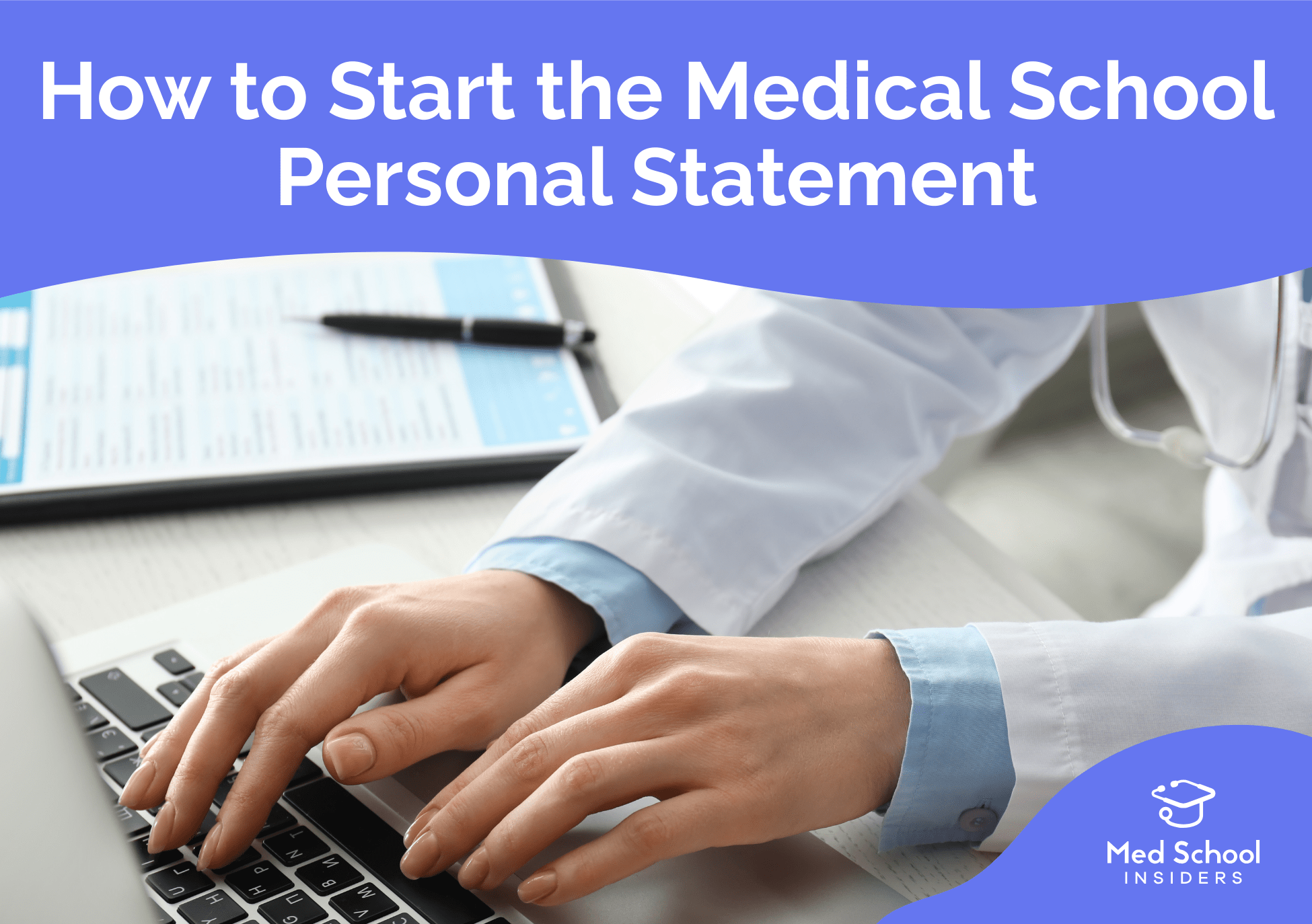
How to Start the Medical School Personal Statement
1 | Research Personal Statement Examples
Every medical student has written a personal statement, which means there’s a wealth of examples to learn from. Start by reading as many quality personal statement examples as you can get your hands on.
If you know someone who successfully matriculated to medical school, ask if you can read their personal statement. Real examples from real people who earned acceptances are invaluable learning tools.
We have a database of personal statements from successful medical school applicants. These examples include detailed feedback that breaks down what makes each essay effective. Reading both the statements and the commentary will give you insight into what admissions committees actually look for.
Keep in mind that these are examples to learn from, not templates to copy. Your personal statement needs to be authentically yours. Use these examples to understand what works, spark your own ideas, and develop your unique narrative.
2 | Use Personal Statement Prompts for Deep Reflection
While the main AMCAS prompt asks “Why do you want to go to medical school?”, this question alone might not immediately spark your best ideas. Personal statement prompts are additional reflection questions designed to help you dig deeper into your experiences and uncover the moments that truly shaped your journey to medicine.
These prompts help you move beyond surface-level answers like “I want to help people” to discover the specific experiences, people, and realizations that make your story uniquely yours. Questions like “Who in your life has had the greatest impact on who you are today?” or “What is the biggest obstacle you’ve overcome?” can unlock memories and insights you might not have considered including in your personal statement.
When working with prompts:
- Clear your mind first with a relaxing activity before brainstorming
- Choose a comfortable medium (digital document or physical notebook) and keep it with you
- Don’t worry about “right” answers—let ideas flow freely without judgment
- Resist the urge to erase anything; even “bad” ideas can spark better ones later
3 | Choose Key Experiences and Traits
Your personal statement isn’t a list of accomplishments—it’s a focused narrative. After reflecting on your journey, you need to narrow down what you want to highlight. Don’t try to cover everything. Choose three to four key traits or themes that best represent who you are and why you’re pursuing medicine.
Think about both your academic and personal accomplishments: research projects, volunteer work, clinical experiences, meaningful hobbies, leadership roles, or challenges you’ve overcome. Which of these experiences genuinely shaped you? Which ones do you have more to say about?
If you choose a particular trait to highlight, like resilience, compassion, or intellectual curiosity, you need concrete experiences to back it up. The admissions committee won’t just take your word for it. They want to see evidence through your stories.
Choose experiences you’re particularly proud of, or that reveal something meaningful about your values. If the admissions committee only remembers one thing about you after reading your personal statement, what do you want it to be?
Personal statements typically highlight experiences that demonstrate:
- Compassion and empathy in patient care
- Passion for patient interaction and service
- Intellectual curiosity for medicine (through academics, research, or self-directed learning)
- Dedication and discipline in pursuing long-term goals
- Perseverance in the face of adversity or setbacks
- Strong interpersonal and professional skills
Remember that the admissions committee will likely ask you to elaborate on your personal statement during interviews. Choose experiences you can speak about authentically and in greater depth.
4 | Allow Your Ideas to Evolve
Don’t get discouraged if your initial ideas don’t make it into your final personal statement. You have to start somewhere. As you write, receive feedback, and continue refining, the direction of your essay will naturally evolve—and that’s a good thing.
Give yourself time to share your drafts with people who have experience reviewing personal statements. What seemed like a brilliant idea in your head might not land as well on paper. Stay flexible and avoid getting too attached to any single concept early on.
Be open to feedback from trusted peers, mentors, and professional advisors. Sometimes the most valuable advice is hearing what isn’t working. A fresh perspective can help you see gaps in your narrative, identify stronger angles, or recognize when you’re telling rather than showing.
Don’t wait to find the “perfect” idea before you start writing. Do your research, reflect on your experiences, choose a direction, and begin. Starting early is critical. It gives you the time you need to revise, edit, and, if necessary, pivot to a completely different approach. The best personal statements are never first drafts.
Things to Do
- Engage the reader immediately. Hook them with a compelling opening that draws them into your story, not a generic statement about wanting to help people.
- Show, don’t tell. Don’t claim you’re compassionate or hardworking—prove it through specific experiences. A story about comforting a Spanish-speaking patient is far more powerful than stating “I am empathetic.”
- Be concise and authentic. Skip the thesaurus and flowery language. You have limited space, so make every word count. Write clearly and naturally—your story should sound like you, not like you’re trying to impress with vocabulary.
Things NOT to Do
- Don’t overuse “I” to start sentences. Vary your sentence structure to avoid sounding repetitive or like you’re simply listing accomplishments.
- Don’t rehash your CV. The admissions committee already has your list of activities. Use your personal statement to provide context, reflection, and insight they can’t find elsewhere.
- Don’t explain medicine to doctors. Avoid lecturing the admissions committee on medical concepts or disease pathophysiology. They’re physicians—focus on your journey, not your medical knowledge.
- Don’t address rejections negatively. If you’re reapplying, acknowledge growth without phrases like “since I failed last time.” Focus on what you’ve learned and how you’ve improved.
- Proofread meticulously. Spelling and grammar errors signal carelessness. Use tools like Grammarly, but also have real people review your work to catch contextual mistakes.
Break Through Writer’s Block
Download our free Personal Statement Guidebook for real examples—both good and bad—with detailed feedback from physicians who’ve served on admissions committees. You’ll get the exact roadmap you need to craft a statement that stands out for all the right reasons.




This Post Has One Comment
I am struggling with writing my personal statement and would love to get more help on making it the best essay.How do I do this ?