
In 2026, How Many Publications for Residency? (By Specialty)
How many publications do you need for residency? See 2026 research item averages by specialty and how they’ve changed since 2020.


So, you want to be a pulmonologist, ridding the world of asthma one patient at a time. Well, not quite.
In this post, we debunk the myths and misconceptions and really address the reality of pulmonology.
We’ve brought our Insider expert to you. Pulmonologist Dr. Sahil Chopra will join me to give you a glimpse into the world of pulmonology. He’s quadruple board certified in internal medicine, critical care, pulmonary, and sleep medicine.
Dr. Chopra: Pulmonology is a specialty focused on the respiratory system and diseases of the airway, lungs, and chest wall, such as asthma, Chronic Obstructive Pulmonary Disease, or COPD, interstitial lung disease, pneumonia, and lung cancer. Pulmonologists also manage patients who require mechanical ventilation and other forms of life support.
Pulmonary medicine can be categorized in at least three different ways: by practice setting, practice type, and by subspecialty.
Pulmonologists can work in a variety of practice settings, such as inpatient, outpatient, and research.
With inpatient, pulmonologists focus on treating patients admitted to the hospital.
Most pulmonologists are trained in critical care, so they round in the ICU, managing critically ill patients suffering from severe respiratory failure, including acute lung injury, Acute Respiratory Distress Syndrome, or ARDS, severe pneumonia, COPD exacerbations, and those on mechanical ventilation.
If on the general floor and not in the ICU, they consult on patients admitted to the hospital who have developed respiratory complications, such as asthma, pneumonia, or COPD. They could also be involved in pre- and post-lung transplant care for hospitals that offer these programs.
Outpatient focuses on managing patients in an office or clinic setting for chronic diseases such as asthma, COPD, cystic fibrosis, bronchiectasis, and interstitial lung diseases, like pulmonary fibrosis and sarcoidosis.
They evaluate patients with persistent respiratory symptoms, abnormal chest images, such as masses or nodules, and unexplained shortness of breath.
Pulmonologists may also screen for and manage lung cancer, coordinating with oncologists and thoracic surgeons to take biopsies and develop treatment plans.
Additionally, there are research and collaboration opportunities with startups, including companies that focus on health optimization, such as those that aim to improve breathing to enhance overall well-being.
Next, pulmonologists can work in community, academic, or private practices.
In the community, pulmonologists with training in critical care medicine serve as intensivists, leading the care of critically ill patients. They may also be called to consult on hospitalized patients with breathing concerns.
Generally, in academic settings, day-to-day work involves a combination of patient care, teaching, and research, typically at a university hospital.
In private practice, pulmonologists focus primarily on clinical patient care outside of a university setting.
Subspecialization also distinguishes a pulmonologist. After completing general pulmonary training of 2-3 years, which is itself a fellowship that follows 3 years of internal medicine, there are several sub-fellowships that a pulmonologist can pursue. Each requires an additional year of training, with the exception of allergy and immunology, which is 2 to 3 years.
Interventional pulmonology focuses on performing procedures. These specialists perform complex, minimally invasive procedures, such as stent placements and bronchoscopies, where they use a camera to go into the airways to take samples or biopsies. They also collaborate with other specialists to develop treatment plans.
Sleep medicine is an outpatient-focused specialty involving sleep testing and managing patients with sleep disorders.
Dr. Chopra: Sleep medicine is the subspecialty I chose to pursue because of my exposure to a breathing condition during sleep called sleep apnea. Now, I run my own sleep clinic called Empower Sleep.
Contrary to popular belief, sleep medicine is not about doing a sleep study or sleep test; it’s about understanding the processes of human physiology during a state of sleep, understanding the intricate rhythms of different organ systems, and the profound impact that sleep has on our physical, emotional, and cognitive health.
On a technical level, sleep medicine explores the nuances of various sleep disorders, from insomnia all the way to sleep apnea. Pulmonologists can also specialize in treating sleep-related breathing disorders.
Pulmonary hypertension is a highly specialized area that focuses on this specific and complex lung condition, which is a disorder of the lung’s blood vessels. These specialists perform numerous procedures related to the lung’s blood vessels, or pulmonary vasculature, and care for critically ill patients.
Lung transplant involves caring for lung transplant patients and is a busy and demanding specialty. Patients are typically very ill, have a limited life expectancy, and are frequently in and out of the hospital and ICU.
Cystic Fibrosis focuses on caring for patients with this congenital condition. It often involves pediatric pulmonologists who manage children until they transition to adult care, a transition that is becoming more common as new medications extend patients’ lifespans.
Occupational and Environmental Lung Disease is characterized as a research-centric field. Specialists often collaborate with large government organizations, such as the CDC or NIH.
Allergy and Immunology means the pulmonologist is specialized in both pulmonary medicine and allergy/immunology, allowing them to diagnose and treat a unique set of complex conditions where the respiratory system and the immune system significantly overlap.
Pulmonology isn’t the only path to allergy and immunology. We explore this career path in detail in So You Want to Be an Allergist/Immunologist.
Dr. Chopra: Let’s clear up some common misconceptions about pulmonology.
First off, there’s a misconception that pulmonologists don’t do procedures. In fact, we perform several different outpatient elective and inpatient emergent procedures, such as bronchoscopy. In this procedure, a thin tube with a camera is inserted through the nose or mouth to examine the airways directly and obtain biopsies.
There’s also endobronchial ultrasound, or EBUS, where an ultrasound is used to perform needle aspiration of lymph nodes and lung tissue. Additionally, there is a thoracentesis, a medical procedure in which fluid is removed from the space between the lungs and the chest wall, known as the pleural space, using a needle.
Another misconception is that they only treat breathing disorders like asthma and COPD. They also treat conditions like bronchiectasis, cystic fibrosis, pulmonary embolism, obstructive sleep apnea, and different forms of lung cancer.
With that being said, the COVID pandemic increased public awareness of pulmonologists and pulmonary conditions, so there are fewer misconceptions than there were before 2020.
There are a few different ways to become a pulmonologist.
The most common is completing a 3-year internal medicine residency followed by a 3-year combined pulmonology and critical care fellowship, which provides additional intensive care unit training. The less common path is three years of internal medicine followed by a 2-year general pulmonology fellowship.
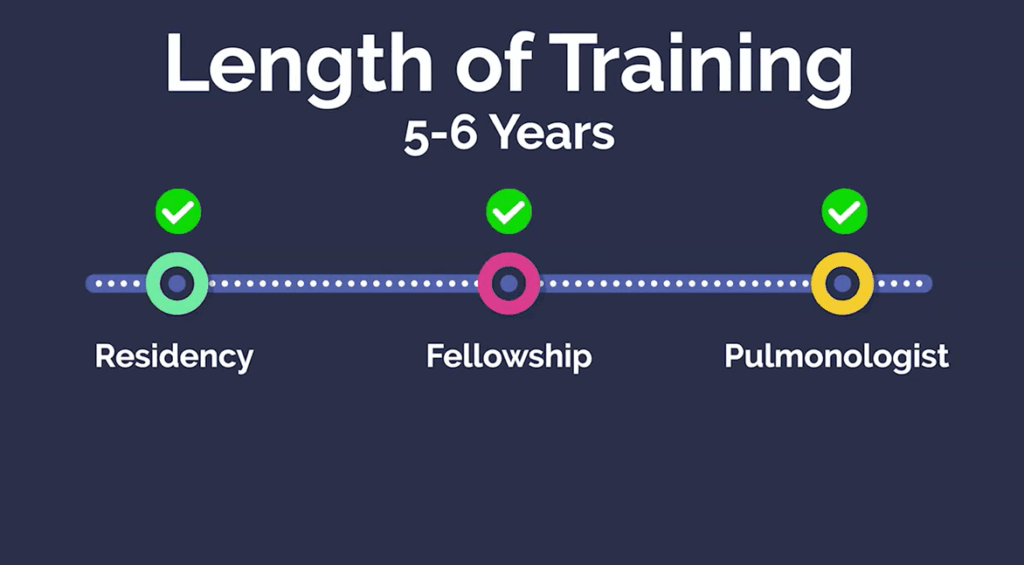
However, after fellowship, physicians are not required to practice both pulmonology and critical care.
If you’re interested in the pediatric route, you would complete a 3-year pediatric residency followed by a 3-year pediatric pulmonology fellowship.
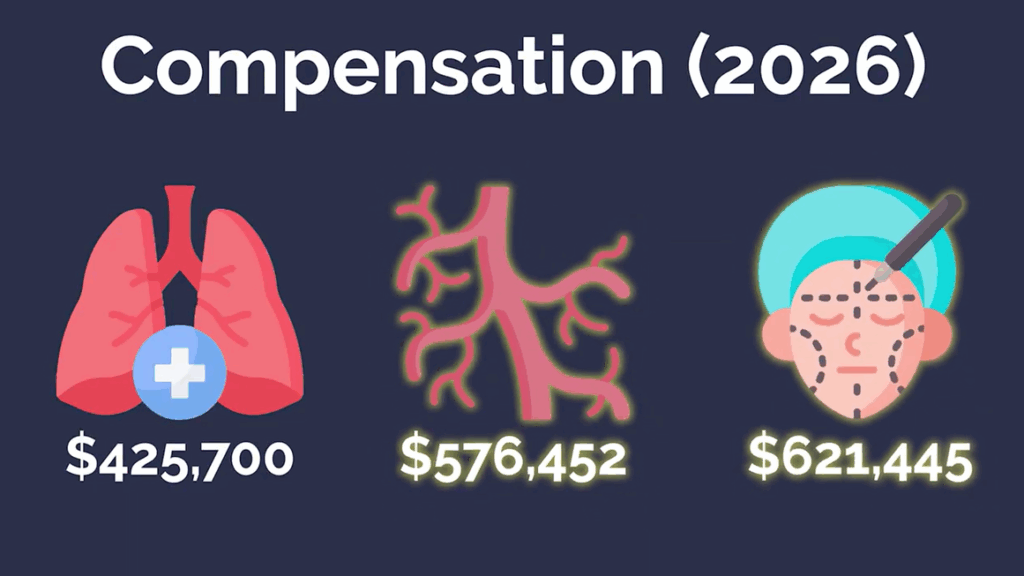
And as far as compensation goes, pulmonology is at the higher end of the midpack, at $410,905 a year. However, this will vary depending on the specific career path you take.
There’s a lot to love about pulmonology.
First off, pulmonology offers a blend of inpatient and outpatient medicine, allowing doctors to care for patients across a wide spectrum of illness severity, ranging from stable outpatients to critically ill patients in the ICU.
The lifestyle is diverse. Working with inpatients means longer hours, whereas outpatient work typically follows an 8-to-5 schedule with minimal call. Many pulmonologists combine both. However, it is generally a busy specialty, not a lifestyle field like dermatology.
Most pulmonologists are also trained in critical care and often split their time between the ICU and general pulmonology duties. This work is also quite fulfilling and gratifying. Relieving a debilitating symptom like shortness of breath brings a great deal of gratitude from patients.
Pulmonologists also have the opportunity to use advanced, cutting-edge technology to perform complex and precise procedures. For example, CT-guided navigational bronchoscopy utilizes a patient’s CT scan to create a GPS-like system that guides a camera to a specific, tiny lobe of the lung for biopsy.
Dr. Chopra: I love pulmonary medicine because it allows me to practice both inpatient and outpatient medicine. There is a mix of elective and emergent procedures. When Pulmonologists work in the ICU it also allows them to take care of critically ill patients who have complex physiology.
Of course, pulmonology is not for everyone and does come with its downsides.
First, your patients will often frustrate you, as you’ll be treating patients with chronic pulmonary conditions like COPD or emphysema, conditions that are caused or worsened by ongoing behaviors, such as smoking. The challenge of helping your patients change these addictive, self-destructive behaviors cannot be overstated.
You’ll also be dealing with many incurable chronic diseases. COPD and interstitial lung disease cause permanent scarring and damage to the lungs that cannot be reversed. As a result, the focus of treatment is often on managing the disease and its symptoms rather than curing it.
That said, on the positive side, managing a patient’s chronic decline allows you to build a strong, long-term relationship with them, which can be quite rewarding, depending on your interest in patient interaction.
Another downside is the length of training, with residency plus fellowship lasting 5-6 years. While there are many other specialties with this length of training, pulmonologists make anywhere from $100-300,000 less than specialties with comparable training lengths, such as vascular surgery at $550,000 or plastic surgery at $620,000.
So, should you become a pulmonologist?
Dr. Chopra: I like to think of it as pulmonary and critical care is internal medicine on steroids.
If you’re someone who loves working with your brain, enjoys doing procedures with your hands, and is fascinated by the specialty of internal medicine then you should really consider becoming a pulmonologist.
But if you hate being the detective internist and don’t enjoy procedures or working in a high acuity setting, then pulmonology is likely not a good fit for you.

How many publications do you need for residency? See 2026 research item averages by specialty and how they’ve changed since 2020.

Dermatologist vs Plastic Surgeon: Which is the best career path for you? We break down compensation, lifestyle, training, and the pros and cons of each career.