In 2026, How Many Publications for Residency? (By Specialty)
How many publications do you need for residency? See 2026 research item averages by specialty and how they’ve changed since 2020.


Is becoming a doctor the right path for you?
Becoming a doctor is an incredibly rewarding career path, but it’s not for everyone. Here are seven signs you’re not cut out to be a doctor.
Sign number one is you don’t have a thirst for knowledge. To become a doctor, you must learn and retain an immense amount of information.
Applying for and getting through medical school requires succeeding at some of the longest and toughest standardized exams, including the MCAT and the various levels of USMLE.
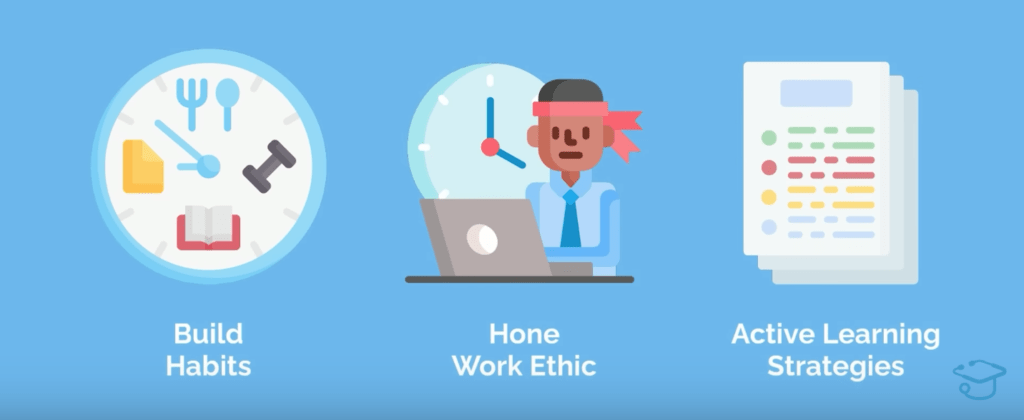
The sheer volume of information you have to learn means that passive study strategies will no longer suffice. You’ll need to build habits, hone your work ethic, and implement active learning strategies to succeed in medical school.
Could you do this without enjoying learning? Sure. But you’ll be miserable studying all the time when it’s a topic you hate.
What’s more, if you do make it through medical school and become a doctor without a joy for learning, you won’t be a very good one. There are definitely physicians out there who lack this thirst for knowledge, but it makes them bad at their job.
Making it through medical school and residency is not enough to keep up with the ever-changing medical landscape. Doctors who don’t have a desire for lifelong learning and don’t seek out new information will continue to fall behind advances in medicine.
It’s not terribly uncommon for doctors with less training or less experience to have a better understanding of cutting edge medical research compared to physicians who have practiced the same way for decades with minimal changes. The best doctors have an ongoing love of learning, so they are always seeking out new medical discoveries and adapting their methods based on the most recent data.
This brings us to sign number two. You shouldn’t become a doctor if you don’t like change and aren’t adaptable.
Students are often drawn to science and math because of the straightforward answers these subjects provide. But when it comes to medicine, very little is cut and dry.
Healthcare is messy and unpredictable. There’s still a lot we don’t understand about the human body. And even when we do think we have a grasp, an unpredictable case can still present itself. For example, foreign accent syndrome, an extremely rare condition where a person starts speaking with a different accent after a blow to the head or a stroke.
Some medical specialties are more predictable than others, but no matter what path you choose, medical advancements and discoveries are always in motion, and there will always be something new to learn. They say that 50% of what you learn in medical school will be completely wrong in 5 years; the hard part is you don’t know which 50%.
Today, these changes are happening faster than ever before due to rapidly evolving technology and even AI capabilities. We covered AI’s evolving role in healthcare in a previous video linked in the description.
Becoming a doctor and continuing to be an effective doctor means constantly adapting. You must be open to letting go of what you thought you knew as advancements in therapies, new treatments, new diagnostic modalities, new technologies, and new ways of doing things come to light.
Even the landscape of employment continues to evolve with mid-levels, including NP’s and PA’s, gaining more and more autonomy in the hospital.
Sign number three is not having strong morals and ethics. All medical school graduates in the US must make a public promise and take a range of oaths before becoming a doctor.
The original Hippocratic Oath is no longer used, but its four fundamentals—respecting patient confidentiality, avoiding harm, respecting teachers, and upholding the integrity of the profession—still feature in the majority of oaths. Some schools today allow students to prepare their own oaths, which include more contemporary themes like patient advocacy, interprofessional teamwork, and striving to erase unconscious biases.
Ethics are fundamental to becoming a doctor because physicians are faced with tough moral dilemmas throughout their careers. This is why ethics are tested in the medical school application process and throughout med school.
The Casper test is comprised of various ethical situations, and you’ll likely be asked questions that test your morals during interviews. Your USMLE Steps will also continue to feature questions involving ethical problem-solving.
If you’re someone who cheats or uses shortcuts when it comes to studying and test taking, the medical profession is not for you. Whether you’re copying someone else’s homework, taking stimulants to enhance your performance, or straight up cheating on a test, you may get ahead in the short-term but these behaviors will catch up with you.
You won’t learn the skills you need to succeed in medical school and residency, and those unethical decisions will stick with you like a stain.
If you’ve considered fibbing, plagiarizing, or exaggerating in your med school application, watch our video on the consequences of lying on medical school applications. Link in the description.
The next reason to steer clear of becoming a doctor is family pressure. If you’re not passionate about the career path and don’t want to become a doctor, doing it for your parents is a terrible decision. If you don’t enjoy medicine going in, it’s unlikely you’re going to have a change of heart and grow to love it later.
The journey through medical school and residency is long, difficult, and expensive, and if you’re not intrinsically motivated to become a physician, there’s a good chance you won’t graduate with flying colors, if you graduate at all. And if you are able to tough it out, you ultimately won’t be good at your job because you won’t want to be there. Hating your work isn’t good for your own health and it’s even worse for the health of your patients.
People reach out to me all the time unsure of what to do because they feel trapped, entering medicine primarily due to family pressure. These are well-intentioned medical students and residents who have put in blood, sweat, and tears into the profession, only to feel trapped and hopeless. By the time they are true to their own feelings about medicine, they’ve usually already lost years and hundreds of thousands of dollars in schooling costs.
If you’re receiving pressure from your family to become a doctor, take time to carefully consider whether it’s truly the path you want for yourself or only what your parents want for you. While your parents may want what’s best for you, they don’t always know what that is, and pressuring you into a profession requiring tremendous commitment and sacrifice certainly isn’t.
Next, if you don’t want to work with people, you should not become a doctor. No matter what specialty you pursue, you will still need to work closely with people, as every specialty involves regular interaction with others and strong people skills.
While there will be less interaction in specialties like radiology and pathology, you’ll still be regularly interacting with colleagues even though you aren’t communicating with patients as much.
Plus, even if your plan is to become a pathologist, the years of training to become a physician require rotations in several different specialties, some of which are heavily patient focused.
At the end of the day, medicine is about helping people, so you should at least be able to tolerate them. And remember, not all of your patients are going to appreciate you or be kind. If you can’t go along to get along, carefully consider if medicine is the right path for you.
The next sign you shouldn’t become a doctor is you don’t want to work hard. This reason is pretty straightforward. Medical school plus residency takes 7 to 11 years of hard work, and depending on your specialty, you might still be working absurdly long hours as a fully trained attending physician.

In medical school, you’ll need to balance rigorous coursework with exams as well as research or clinical activities if you expect to match into residency.
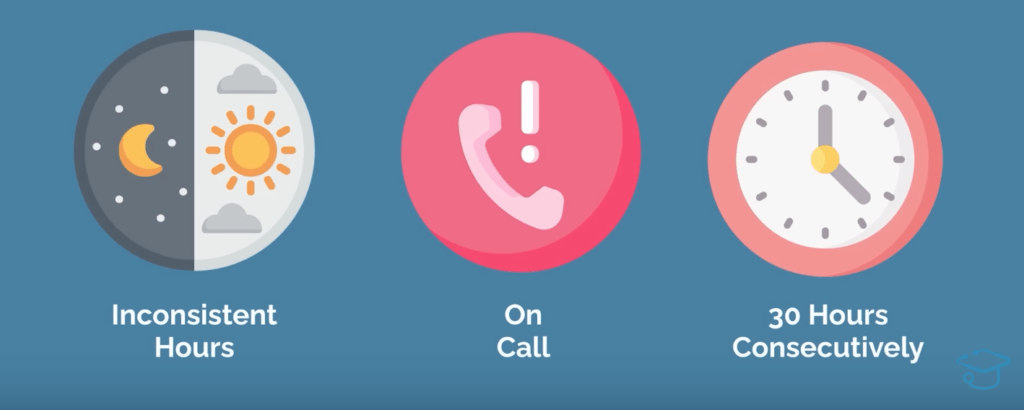
Once in residency, you could work 80 hours or more per week for certain specialties. You’ll have inconsistent hours, you may be on call, and you could be scheduled to work up to 30 hours in a row. It’s no joke—medical school and residency will be some of the most difficult years of your life.
The long days and emotional toll of being a doctor will continue into your career. Although some specialties offer more balance and fewer hours, you can still expect to work 45-55 hours a week on the lower end.
It’s far from a chill job. If you don’t want to work hard for the next 30-45 years, becoming a doctor is not the ideal path for you.
Lastly, getting into medicine for the money alone is a sign you shouldn’t become a doctor. I’m not one to virtue signal and pretend money doesn’t matter. If doctors in the US were paid $30,000 per year instead of $300,000 per year, it wouldn’t be anywhere near as competitive as it is. But money shouldn’t be a primary motivator.
There’s a huge misconception about doctors making a lot of money. While it’s true practicing physicians make low-to-mid six figures, they often enter their career with hundreds of thousands of dollars of debt.
No job gives you the same guaranteed level of salary as a doctor, but other jobs, like engineering or finance, can give you a moderate salary with far less opportunity cost. You don’t need to slave away making little to no money for nearly a decade before cashing in. As a doctor, you’re playing catch up while many other career paths set you up with large salaries much sooner.
Plus, doctor salaries continue to decline as inflation increases at a much higher rate. We dig into these financial trends and cover why doctors are often broke in a previous video. Link in the description.
Brass tacks—if you are getting into medicine for the money alone, your heart won’t be in it. You won’t enjoy the work, and you won’t be good at your job.
Choosing to go to medical school is not a decision to be made lightly. If after this video you’re still not sure whether you want to become a doctor, check out our So You Want to Be playlist.
Each episode includes key insights from doctors working in that specific specialty, including what to expect from the career, how to get there, and whether or not it’s the right path for you.
Thank you all so much for watching. Much love.

How many publications do you need for residency? See 2026 research item averages by specialty and how they’ve changed since 2020.

Dermatologist vs Plastic Surgeon: Which is the best career path for you? We break down compensation, lifestyle, training, and the pros and cons of each career.



This Post Has One Comment
I miss you, medical major. This prestigious field of study seems impossible for me to pursue in Indonesia due to registration regulations that are archaic for non-traditional graduates and adults. Although there have been changes in registration rules over the past few years, they still feel excessively rigid. They are nothing like those abroad—especially in your country—where systems are much more open to non-traditional applicants. In those countries, medical schools are more welcoming to graduates from any undergraduate major, rather than strictly requiring a high school science major background. The only way to chase this grand dream is to apply for a medical major overseas. Honestly, I do not know what to hope for in this situation. How much longer will these rigid rules persist ? I hope these bitter regulations will soon crumble and transform into a more inclusive system, much like in your country (in the U.S).