
In 2026, How Many Publications for Residency? (By Specialty)
How many publications do you need for residency? See 2026 research item averages by specialty and how they’ve changed since 2020.
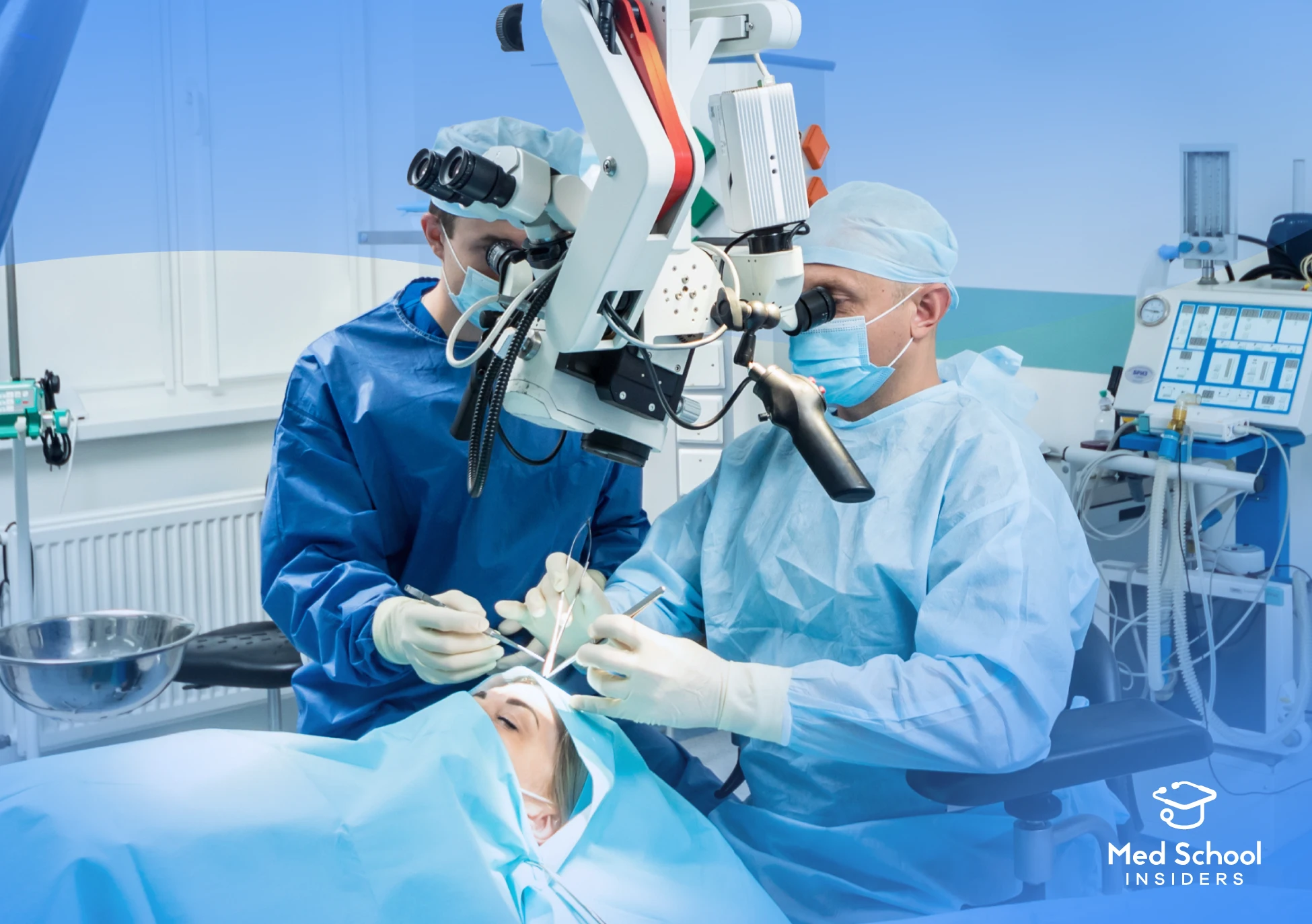
Everyone thinks neurosurgeons are the smartest doctors and orthopedic surgeons are just jocks with power tools. But the reality is way more complicated, and it might surprise you.
In this Career Battle, we’re putting neurosurgery vs. orthopedic surgery head-to-head. We’ll break down compensation, lifestyle, training length, and what it actually takes to succeed in each field.
First, let’s clarify what sets these two surgical powerhouses apart.
Both neurosurgeons and orthopedic surgeons are among the highest-paid physicians. Both require grueling residencies. Both consistently rank in the top one or two tiers of competitive specialties.
But the similarities largely end there.
Neurosurgery involves surgical interventions on the nervous system. That includes the central nervous system, your brain and spinal cord, and the peripheral nervous system, which includes all the other nerves in your body. Neurosurgeons operate on the most complex organ system in the human body, working with precision on structures that control everything from movement to memory.
Orthopedic surgery focuses on the musculoskeletal system. Bones, joints, ligaments, tendons, and muscles. They fix broken bones, repair torn ligaments, and replace worn-out joints.
While neurosurgeons work with software, orthopedic surgeons work with hardware. And admittedly, both do have overlap when it comes to spine surgery. But the surgeries in both specialties are a lot more crude than most people think, as we’ll touch on later.
So, which path is right for you? Let’s break it down.
The training paths for these two specialties differ in length and structure.
To become a neurosurgeon, you must complete medical school followed by a 7-year neurosurgery residency. This is the longest residency of any specialty, start to finish. Most neurosurgery residencies include one dedicated research year, making the total 8 years, though some programs are now moving away from this requirement.
After residency, you can practice as a general neurosurgeon or pursue additional fellowship training in subspecialties like skull base surgery, spine, functional neurosurgery, or pediatric neurosurgery. Fellowships typically last 1 to 2 years.
To become an orthopedic surgeon, you must complete medical school followed by a 5-year orthopedic surgery residency. A research year is optional, though it can be strategically valuable for those targeting academic programs or looking to strengthen a competitive fellowship application.
After residency, over 80% of orthopedic surgeons choose to subspecialize with a fellowship. Common subspecialties include trauma, spine, sports, hand, and joints. Some even complete two separate fellowships. Orthopedic fellowships typically last 1 year.
In terms of pure training length, neurosurgery requires 2 additional years of residency compared to orthopedics.
That said, most orthopedic surgeons complete at least one fellowship, which narrows the gap considerably.
But training length is only part of the story. The intensity of training matters just as much.
Neurosurgery residency is consistently ranked as the most brutal and rigorous of all surgical specialties. Despite the ACGME’s 80-hour workweek restrictions, it’s not uncommon for neurosurgery residents to exceed 100 hours regularly.
The call schedule is punishing, and the psychological toll is hard to overstate. Think about who actually needs brain surgery; many of these patients are facing tumors, hemorrhages, or traumatic injuries with genuinely grim prognoses. Unlike orthopedics, where most patients walk out better than they came in, neurosurgery means regularly delivering devastating news and watching patients you operated on decline anyway. That weight accumulates.
That said, orthopedic surgery residency is still a demanding surgical training program. But the difference with neurosurgery is consistency. In neurosurgery, the grind is relentless across the board. In ortho, the punishing months are interspersed with more manageable ones, which makes the overall experience more sustainable, even if it doesn’t feel that way in the thick of a hard rotation.
Now let’s talk competitiveness. According to specialtyrank.com, the most comprehensive competitiveness analysis out there, neurosurgery currently ranks fifth among medical specialties. Orthopedic surgery ranks fourth.
The index weighs five key factors: Step 2 CK scores, match rates, research requirements, top 40 NIH-funded medical school attendance, and AOA status.
The rankings shift slightly every two years when the NRMP releases new data, but after over a decade of calculations, both specialties have consistently ranked in the top five. Ortho has dipped to sixth once, back in 2014, but that’s the exception, not the rule.
Consistently ranking in the top five means both specialties require an exceptional application to even be in the conversation.
For neurosurgery, successful applicants have an average Step 2 CK score of 255. The match rate is 70.6%.
Perhaps most striking is the research requirement. Neurosurgery boasts the second-highest average research items of any specialty, only behind plastic surgery. Successful applicants average 45.5 items, including publications, abstracts, and presentations.
That’s more than eleven research items per year during medical school, assuming you don’t take gap years. Many neurosurgery applicants pursue research years or even PhD programs to build their CVs.
For orthopedic surgery, successful applicants have an average Step 2 CK score of 258. The match rate is 69.0%. Research requirements are also substantial, with successful applicants averaging 34.3 items.
When it comes to compensation, both specialties rank among the highest on the physician pay scale.
Neurosurgeons earn an average of $830,000 per year. That makes neurosurgery the highest-paid specialty in all of medicine.
Orthopedic surgeons earn an average of $697,000, placing them third behind neurosurgeons and thoracic surgeons.
That’s over a $130,000 difference in favor of neurosurgery. Think about that over a 30-year career. That gap adds up to millions in additional earnings.
However, these are averages, and there’s significant variation within each specialty based on subspecialization and practice setting.
Spine surgeons in both fields tend to earn the most, often exceeding $1 million annually in private practice. Academic positions in either specialty typically earn less than private practice.
Now, how do these two specialties compare when it comes to lifestyle?
Neurosurgery has one of the most challenging lifestyles of any medical specialty, even beyond residency.
In addition to scheduled cases, neurosurgeons must take trauma call. It’s a near-universal part of the job. That means they can be called in at any moment to operate on a patient with a life-threatening brain bleed or spinal cord injury. This unpredictability wreaks havoc on personal life.
Neurosurgeons often work 60 to 70+ hours per week. Some weeks can easily exceed 80 hours when on call. Surgeries can be incredibly long. Ten hours. Twelve hours. Even 18+ hours for complex skull base cases.
The stress is relentless, and the stakes are always high. A single mistake can leave a patient paralyzed, brain-damaged, or dead.
In medicine, we say that neurosurgeons make the most money but don’t have any time to enjoy it.
Orthopedic surgery also has a demanding lifestyle, though it’s generally more manageable than neurosurgery. Orthopedic surgeons work long hours, often 50 to 60 hours per week. Those who take trauma call will have unpredictable schedules as well, but this varies significantly by subspecialty. A spine or joint surgeon may have very limited trauma call compared to a traumatologist.
But here’s the key difference. Much of orthopedic surgery is elective, allowing you more control over your schedule.
Surgeries in orthopedics tend to be shorter than in neurosurgery. Most cases last 2 to 4 hours. Even complex reconstructions rarely exceed 8 hours. This means you’re less likely to be stuck in the OR all day and night.
Sports, joints, and hand, foot, and ankle tend to have more predictable schedules with mostly elective cases. Trauma, as the name suggests, involves more emergencies and less predictable hours. Spine falls somewhere in the middle.
Overall, orthopedic surgery offers a more balanced lifestyle than neurosurgery.
Before we get to the pros and cons, drop a comment to let us know what medical careers you’d like us to compare next.
Let’s explore what draws people to each specialty.
As a neurosurgeon, you’ll be working on arguably the most fascinating and mysterious organ of the body: the brain. You’ll get to touch, change, and augment the central nervous system in real time. The intellectual satisfaction is unmatched, and it’s a highly innovative field. Functional neurosurgery, where the line blurs between what is you and what is hardware, raises profound questions about consciousness, free will, and what it means to be human.
Only a few specialties truly save people’s lives on a regular basis. Neurosurgery is one of them. At a moment’s notice, you may be called in to remove a life-threatening hematoma or decompress a herniated brain. While the surgeries may become routine, the feeling of saving someone’s life never will.
Unlike many surgical specialties, neurosurgeons handle intensive medical management. You’ll be titrating sedatives to manage intracranial pressure. Adjusting ventilator settings. Reading EEGs to detect seizures.
You won’t miss the medical side of medicine.
On the other hand, as an orthopedic surgeon, you’ll actually fix pathologies rather than just manage them. Patients come in with a distinct problem. A broken bone. A torn ACL. A worn-out knee. And you have a way to fix it.
The outcomes are generally excellent, with most patients experiencing substantial improvement after surgery.
Plus, the surgeries are fun. While scopes and minimally invasive procedures are becoming more common across all surgical specialties, orthopedics still has plenty of open cases with amazing exposure and anatomy to appreciate. There’s something deeply satisfying about the hands-on, physical nature of the work.
It’s a team sport. Most orthopedic surgeons come from sports backgrounds themselves, so they’re used to being team players and have a strong sense of camaraderie. They know how to work hard but also have a good time.
There are two main factors that push students away from neurosurgery. First, think about the types of patients who need neurosurgical intervention. They’re very sick and often have poor outcomes. Many of your patients will suffer immensely or lose their lives despite your best efforts. That may not sound so bad right now, but day after day, year after year, that sort of heaviness will weigh on you.
The second major factor is that neurosurgery isn’t as precise and meticulous as many expect brain surgery to be. Certain aspects are highly precise, like skull base surgery, but much of neurosurgery is surprisingly crude and more similar to orthopedic surgery than something like plastic surgery.
But the most notable downside is the lifestyle. It’s brutal. The hours are long. The call is unpredictable. The constant high-stakes stress and vigilance take a toll. You have to be on top of your game, 24/7.
Now let’s look at the downsides of ortho. As with many surgical specialties, it can have challenging hours. That said, be thankful those long hours are in the emergency department and operating room doing procedures, not stuck in the clinic.
For better or worse, it will be difficult to escape the bro stereotype. All personalities are welcome, but the bro culture dominates. If you don’t fit that mold, you may feel like an outsider at times.
How can you decide if neurosurgery or orthopedic surgery is the right field for you?
If you’re fascinated by the brain and nervous system, intellectually curious to a fault, and driven by the challenge of solving medicine’s most complex problems, neurosurgery may be your calling.
You’ll need incredible stamina to endure a 7-year residency and continue working challenging, unpredictable hours as an attending. You’ll need to be okay with poor outcomes and patient suffering, because it’s part of the job. And you’ll need to have a passion for research and academic medicine, because that’s what the field values.
But if you can handle all that, neurosurgery offers unparalleled intellectual stimulation, the opportunity to save lives, and the highest compensation in medicine.
If you love musculoskeletal anatomy, enjoy working with your hands, and want to see tangible results from your interventions, orthopedic surgery may be the better fit.
You’ll need to be competitive. Both in the Match and in life. Ortho attracts athletes and high achievers. And you’ll need the physical strength and stamina to handle the demands of the specialty.
But if that sounds like you, orthopedic surgery offers excellent outcomes, great camaraderie, high compensation, and a somewhat better lifestyle than neurosurgery.
The stereotype is that neurosurgeons are the intellectuals and orthopedic surgeons are the jocks. And like all stereotypes, there’s some truth to it.
Find out if you have what it takes to match into neurosurgery or ortho at SpecialtyPredictor.com. See how your stats match up to other premed and med students interested in these fields, and get a quantified score on your profile, all completely free.
How many publications do you need for residency? See 2026 research item averages by specialty and how they’ve changed since 2020.

Dermatologist vs Plastic Surgeon: Which is the best career path for you? We break down compensation, lifestyle, training, and the pros and cons of each career.