
In 2026, How Many Publications for Residency? (By Specialty)
How many publications do you need for residency? See 2026 research item averages by specialty and how they’ve changed since 2020.
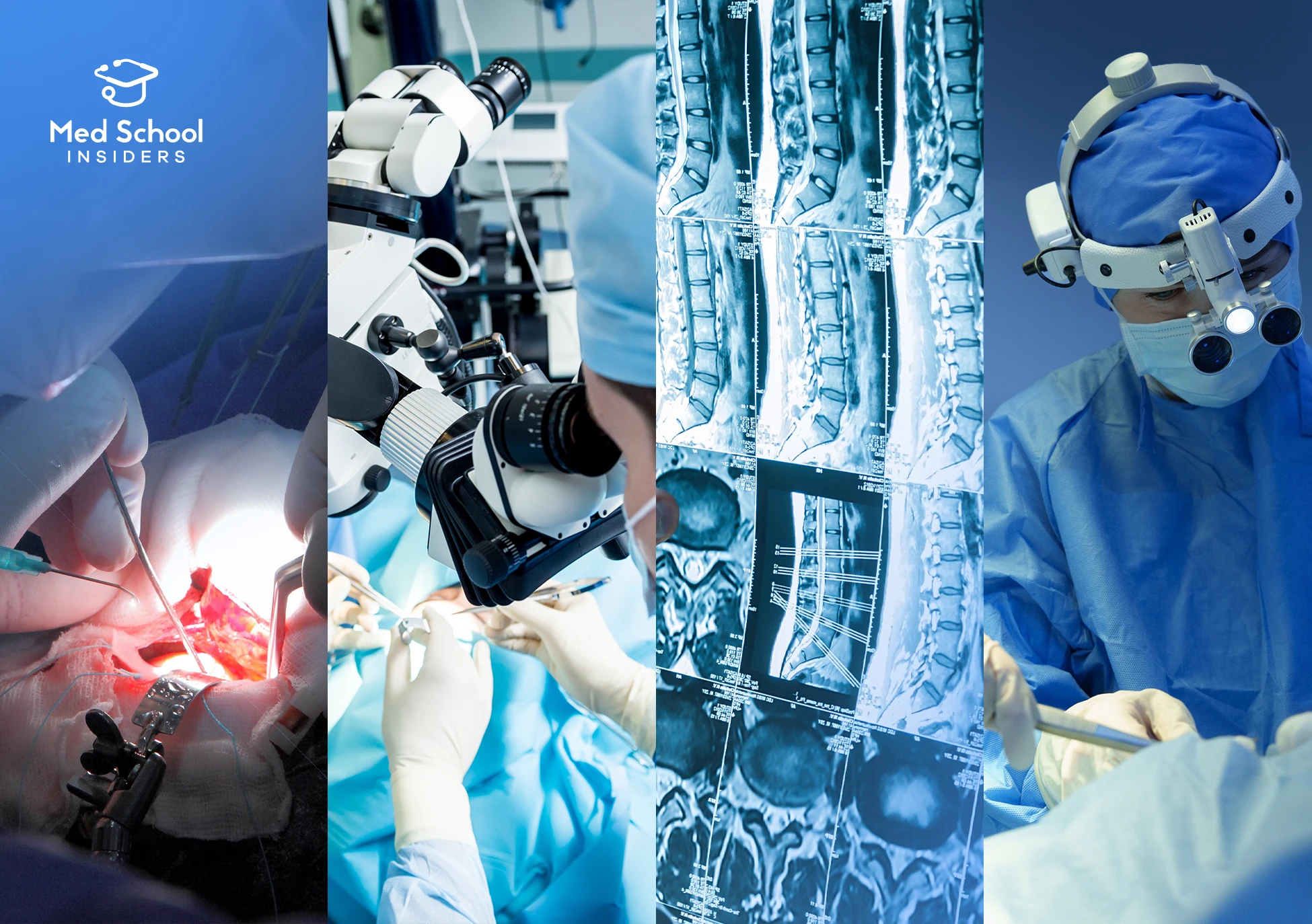
The patient is wide awake.
She’s lying on an operating table with her skull open, a surgeon’s instruments working inside her brain, and she’s doing math problems out loud.
Not because anyone is torturing her. Because the surgical team needs to know, in real time, whether they’re cutting too close to the region that handles language and cognition. The moment her answers start slipping, the surgeon stops. Adjusts. Tries a different angle.
This is an awake craniotomy, or in other words, a regular Tuesday afternoon in neurosurgery.
There are over a million licensed physicians in the US. Fewer than 4,000 of them are neurosurgeons. It’s the longest residency in medicine at seven years, one of the hardest specialties to match into, and the highest-paying in all of medicine. And for some neurosurgeons, seven years still isn’t enough. Fellowship training is where the specialty’s most focused surgeons go to master a single corner of an already demanding field.
Today, we’re breaking down eight neurosurgery fellowship pathways and what each one involves.
Endovascular neurosurgery is one of the fastest-growing areas in the specialty.
Instead of opening the skull, endovascular neurosurgeons work through catheters threaded from a groin artery into the brain’s vessels. From there, they can coil a brain aneurysm before it ruptures, perform a thrombectomy to remove a clot during an acute stroke, or embolize an arteriovenous malformation, an abnormal tangle of blood vessels that can bleed without warning.
The procedure that’s changed this field the most is mechanical thrombectomy for ischemic stroke. Brain tissue dies fast, and getting a clot out quickly can be the difference between a full recovery and permanent disability.
Back when I was on the UCLA Student Stroke Team, the neurologists and neurosurgeons would tell us “time is brain.”
This fellowship runs one to two years, and given how fast the field is moving, demand for trained endovascular neurosurgeons continues to grow.
Pediatric neurosurgery is a two-year fellowship and one of the most demanding paths in all of surgery, technically and emotionally.
Pediatric neurosurgeons manage conditions that rarely exist in adult medicine. Hydrocephalus, where cerebrospinal fluid builds up inside the skull and must be drained with a shunt. Craniosynostosis, where the skull fuses too early, must be reconstructed before it restricts brain growth. Quick side note, it’s often plastic surgeons and neurosurgeons working side by side to correct craniosynostosis in the OR together. Or there’s spina bifida, where part of the spinal cord is exposed at birth. Then there are pediatric brain tumors, the most common solid tumor in children.
Operating on a two-year-old’s brainstem is a different challenge than the same procedure in an adult. The anatomy is smaller, the tolerance for blood loss is lower, and a single wrong move costs more. Positions are limited, and the surgeons who pursue this path tend to stay in it for life.
Spine is the highest-volume subspecialty in neurosurgery, covering degenerative disc disease, herniated discs, spinal cord compression, deformity, and traumatic fractures.
The spine is also shared territory. Both neurosurgeons and orthopedic surgeons perform spinal procedures, and at many hospitals, they compete for the same cases. Fellowship-trained spine neurosurgeons tend to focus on complex intradural and cervical work, while orthopedic spine surgeons often take more of the high-volume lumbar fusion and deformity market. Where you train will shape what you operate on.
Compared to most of neurosurgery, spine offers more predictable scheduling. Emergencies still happen, but the elective case load gives you more control over your calendar.
The skull base is the floor of the cranial cavity, where some of the most complex tumors in the body grow, like acoustic neuromas, meningiomas, chordomas, and pituitary adenomas. These structures sit directly adjacent to cranial nerves, major arteries, and the brainstem. There is no room for error.
Most skull base cases are done in collaboration with ENT surgeons, particularly for approaches through the nose or around the temporal bone. Those working relationships often define a surgeon’s career. The fellowship is one year and is offered at a small number of academic centers with the case volume to support it.
While all of these career paths may sound interesting, know that they are incredibly difficult. Getting into a neurosurgery fellowship is hard. Getting into a neurosurgery residency in the first place is even harder. It’s consistently one of the top three most competitive specialties in medicine, and the biggest reason is research.
The average matched neurosurgery applicant has 37.4 research items, the highest of any specialty, more than plastic surgery and dermatology. That’s over nine items per year of medical school, and that number is expected to rise when new match data is released this summer.
SpecialtyRank.com shows how neurosurgery compares to other specialties and keeps up to date on the number of research items the average matched applicant has.
35 to 40 research items can feel like a number designed to end the conversation before it starts.
When I was doing my college premed research at UCLA, I worked my tail off studying my own condition of inflammatory bowel disease, and I came away with not a first author, not a second author, but a third author publication and a fourth author abstract. That’s it. Two low-impact research items.*
But once I decided I wanted to match into plastic surgery, another one of the most competitive specialties in medicine, I knew that approach wasn’t going to cut it, so I built a completely different system. In just my final year of medical school, I earned 63 research items, including 27 publications and 36 abstracts and presentations. Most of them were first author.
That brought my total before even applying to plastic surgery residency to 66 research items. Now you might be thinking, okay, a lot of volume, probably junk. But here’s the kicker. A decade later, with no new research since medical school, I’m still among the top 5% most cited physicians on Doximity, and my H-index, a score that measures how widely your research is cited by other scientists, sits at 16.
An H-index of 16 means I have at least 16 papers that each have been cited at least 16 times or more by other researchers. It’s the most widely used and respected measure of research impact to measure not just quantity, but also quality. And I want you to steal these same strategies that I innovated, going from two low-quality items over three and a half years to then 63 high-quality items in just 1 year. You can learn more in the link in the description.
The first four fellowships we’ve covered are well-established, with standardized training and clear pathways to broad certification. The next four are different. They’re less uniformly accredited, the programs and their length vary from one institution to the next, and what you get out of them depends heavily on where you train.
Functional neurosurgeons treat disorders of brain function rather than structural lesions. It’s a different kind of problem than most surgeries.
The primary procedure is deep-brain stimulation, or DBS, where electrodes are implanted into specific targets inside the brain and connected to a pulse generator placed under the skin of the chest. DBS is FDA-approved for Parkinson’s disease, essential tremor, dystonia, and OCD, with active research expanding into depression and Alzheimer’s disease. Stereotactic radiosurgery, including Gamma Knife and CyberKnife, rounds out the fellowship, using focused radiation to treat tumors and vascular malformations without a single incision.
Most patients in this field have chronic conditions rather than acute crises, which gives the work a different pace than anything else in neurosurgery.
Surgical neuro-oncology centers on brain and spinal cord tumors. The most prominent is glioblastoma, or GBM, the most aggressive primary brain tumor in adults and one that’s almost always fatal despite surgery, radiation, and chemotherapy. The median survival rate is about 15 months. Operating on these tumors is technically demanding. So is the conversation with the patient and family beforehand.
Modern tumor surgery is getting sharper. A drug called 5-ALA causes tumor cells to glow pink under specific wavelengths of light, letting surgeons see margins more clearly during resection. Intraoperative MRI lets them check their work mid-case. The awake craniotomy from the start of this video is standard practice when tumors sit near regions that control language, movement, or cognition.
Most surgical neuro-oncologists end up in academic centers, working alongside radiation and medical oncology on complex cases.
Peripheral nerve surgery covers more ground than the name suggests, like repairing severed nerves after trauma, decompressing chronically compressed nerves, reconstructing the brachial plexus after high-speed injuries, and managing nerve tumors.
The patient population here tends to be younger and otherwise healthy, people whose lives have been significantly disrupted by a single injury. Recovery plays out over months to years, and the long follow-up is part of the job.
Traumatic brain injury is one of the leading causes of death and disability in the US. Trauma neurosurgeons make fast decisions about whether to take a patient to the OR for a hematoma evacuation, how aggressively to manage intracranial pressure, and when operating will actually help. Those calls happen under time pressure, with incomplete information.
The critical care side extends into the neuro ICU, managing patients with severe TBI, subarachnoid hemorrhage, and spinal cord injury around the clock. The fellowship blends operative decision-making with the skill set of an ICU intensivist.
Grab the research strategy that got me 60+ research items, and find out if you have what it takes to become a neurosurgeon. We’ll show you what separates neurosurgeons from other physicians, and whether or not you’re the right fit for this highly competitive field.
How many publications do you need for residency? See 2026 research item averages by specialty and how they’ve changed since 2020.

Dermatologist vs Plastic Surgeon: Which is the best career path for you? We break down compensation, lifestyle, training, and the pros and cons of each career.