Before you spend a decade training for a career in medicine, it's worth asking: Is there any reason to actually be optimistic? These are the most optimistic doctor specialties.
Table of Contents
Every week, there’s a new doctor online explaining why they quit. AI is coming for their job. Burnout is at an all-time high. The system is broken. So before you spend a decade training for a career in medicine, it’s worth asking: Is there any reason to actually be optimistic?
Turns out, yes. But not everywhere.
In 2026, physicians across 29 specialties were asked to rate their specialty’s long-term future. Most weren’t feeling it. Twenty-five of those 29 specialties had fewer than half their doctors saying they were optimistic.
But not all doctor career paths were so bleak. These are the most optimistic doctor specialties.
5 | Neurology & Preventive Medicine (tie) — 49%
Two specialties tied at fifth with 49% optimism, and they’re here for different reasons.
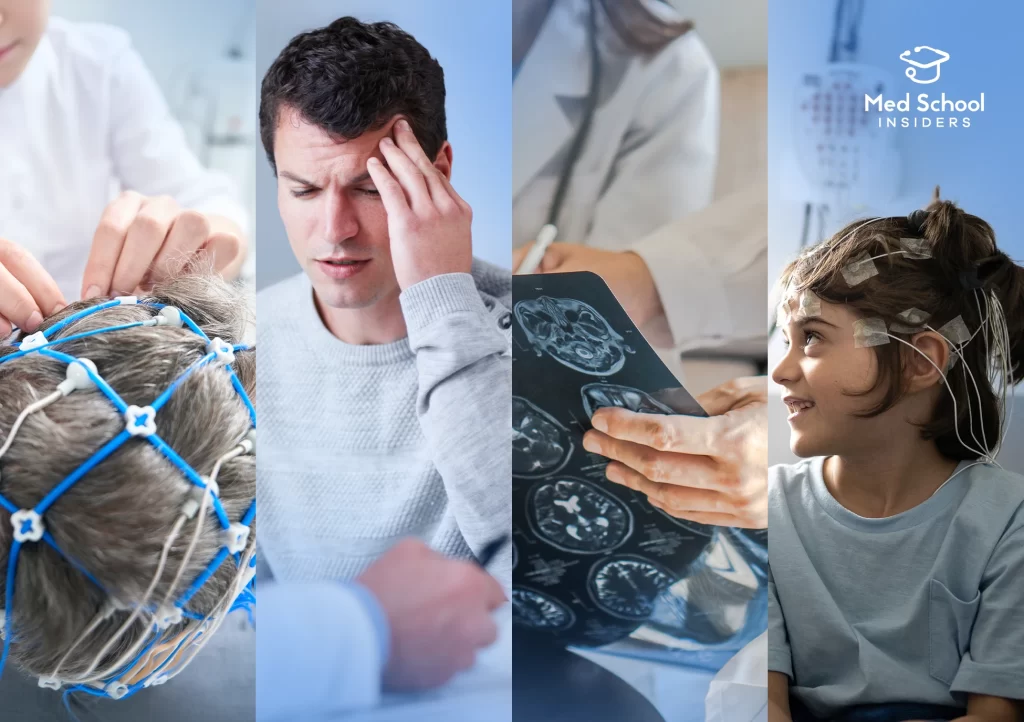
Neurologists diagnose and treat disorders of the brain, spinal cord, and nervous system. Demand is rising alongside an aging population, and the field has seen significant advances in treatment in recent years, giving physicians more options than they had a decade ago.
Preventive medicine physicians focus on keeping people healthy before they ever get sick.
It’s an emerging field gaining real momentum as patients and health systems increasingly prioritize prevention over treatment. Longevity medicine, lifestyle medicine, population health: the cultural moment is moving in this direction.
4 | Otorhinolaryngology — 54%
ENT physicians treat conditions of the ears, nose, and throat, as well as structures of the head and neck. The specialty consistently ranks at the lower end of burnout among surgical fields at 43%.
Compensation averages almost $550,000 annually. The work is procedurally rich, outcomes are generally positive, and the hands-on surgical nature of ENT offers real insulation from automation concerns.
3 | Plastic Surgery — 55%
Plastic surgeons restore and reconstruct tissue, from trauma repair to cosmetic procedures. The specialty has the lowest burnout rate in medicine at 37%, with average compensation of over $625,000.
There are two types of plastic surgery: reconstructive, which restores form and function after injury, illness, or congenital abnormalities, and aesthetic, which enhances appearance in otherwise healthy patients.
Aesthetic is elective and cash-pay, which means less insurance friction and more control over how you run your career.
The tactile judgment and aesthetic sensibility this work demands aren’t things a machine picks up easily. You’re working with your hands in a meticulous way, something not easily replicated by AI… at least not yet.
2 | Psychiatry — 57%
Psychiatrists diagnose and treat mental health conditions ranging from anxiety and depression to schizophrenia and bipolar disorder. The AI conversation in mental health is real. Tools are multiplying, and some researchers have raised serious questions about where AI is headed in psychiatric diagnosis. And yet, psychiatrists themselves are reporting optimism, which is worth paying attention to.
A few things may explain it. Mental health demand has grown substantially, and the provider shortage remains severe. Whatever AI is doing at the margins, it hasn’t closed that gap. Patients still want a human across from them, and the legal and clinical liability of unsupervised AI in high-stakes mental health settings remains unresolved.
That said, recent research suggests AI can emulate empathy and human connection more effectively than most people expect, which means the long-term picture is less settled than psychiatrists may think.
1 | Oncology — 70%
Oncologists treat cancer, managing chemotherapy, immunotherapy, targeted therapies, and the full arc of a patient’s care through one of medicine’s most serious diagnoses.
At 70%, they’re not just the most optimistic specialty in this survey. They’re the most optimistic specialty by a 13-point margin, with Psychiatry trailing in second place at 57%.
Cancer cases in North America are projected to increase 56% between 2022 and 2050. The oncologist shortage already exceeds 2,000 providers, and only 14.5% of practicing oncologists are under 40. One oncologist surveyed described it simply: “demand will increase with an aging population, and the shortage is particularly acute in rural areas.”
As for AI, oncologists aren’t worried. They’re welcoming it. From imaging interpretation to documentation to treatment planning, AI is giving an already overwhelmed field more capacity to meet a demand that isn’t slowing down.
Dr. Kevin Jubbal graduated from the University of California, Los Angeles magna cum laude with a B.S. in Neuroscience and went on to earn his M.D. from the University of California, San Diego as the sole recipient of the top merit scholarship for all 4 years. He matched into Plastic & Reconstructive Surgery residency at Loma Linda University Medical Center. He has authored more than 60 publications, abstracts, and presentations in the field of plastic surgery.
Dr. Jubbal is now a physician entrepreneur, and his passion for medical education and patient care led him to found the Blue LINC Healthcare Incubator and Med School Insiders. Through these and other projects, he seeks to empower future generations of physicians, redefine medical education, and improve patient care through interdisciplinary collaboration.
Dermatologist vs Plastic Surgeon: Which is the best career path for you? We break down compensation, lifestyle, training, and the pros and cons of each career.