
How to Prepare for Residency: Finances, Studying, and Self-Care
Matched and heading into residency? Here’s how to handle your finances, what’s actually worth studying, and how to spend the months before July 1st.

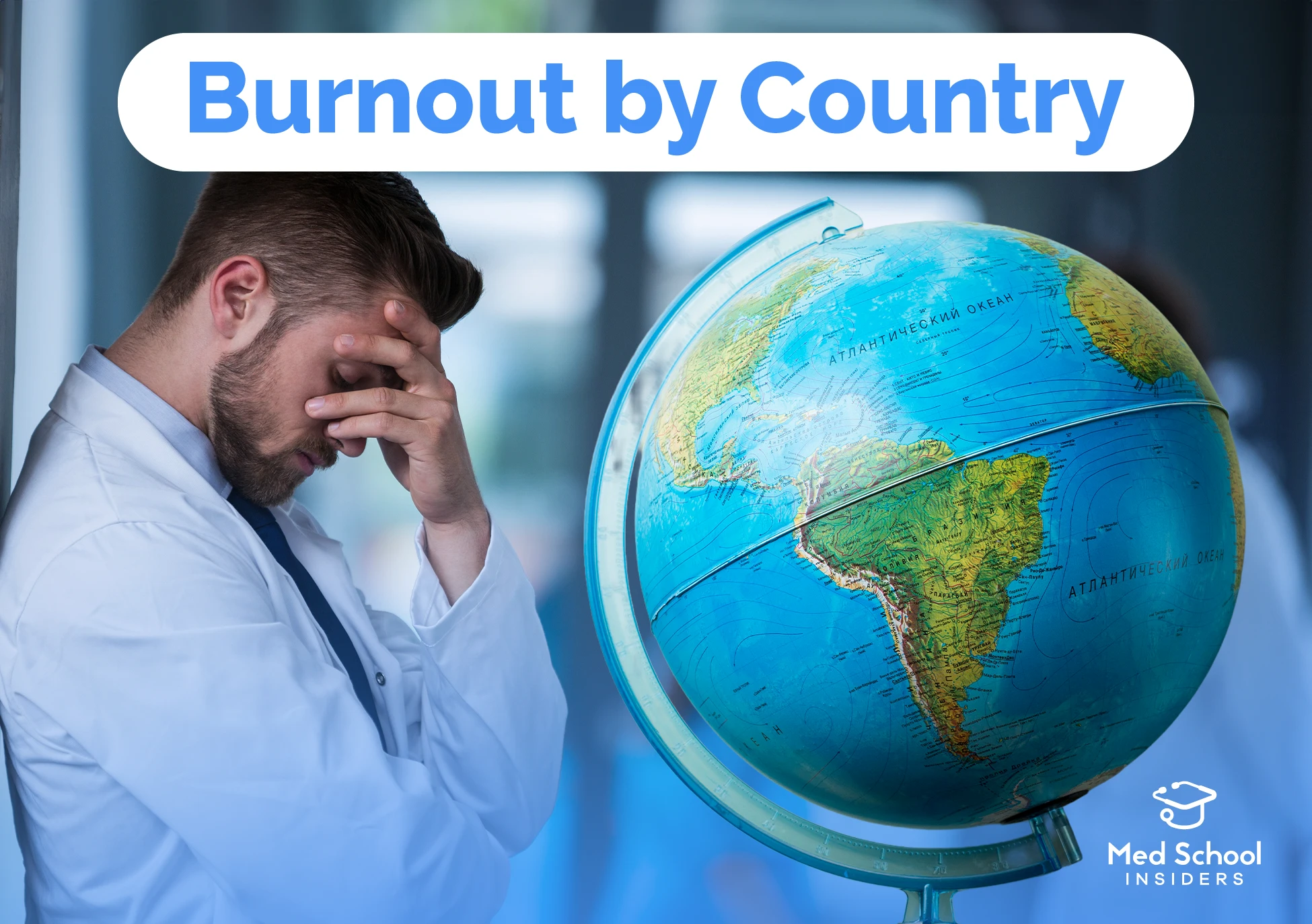
You make six figures, have prestige, and you’re literally saving lives—so why are you so burned out? A new Medscape International Mental Health & Wellbeing Report asked that exact question across 11 countries. And the results are… complicated.
Burnout rates vary dramatically by country. So the question becomes: Is the US actually the best place to practice medicine?
Doctors surveyed were asked if they felt: Burnt out, Depressed, Both burned out and depressed, or None of these. Although burnout and depression are different, to get a complete picture of what’s going on in each of these countries, we’re ranking them based on the percentage of doctors who feel burned out and/or depressed.
Argentina sits at a staggering 69% when it comes to burnout and depression.
Argentina faces severe systemic challenges, in part due to the country’s ongoing macroeconomic crises. Chronic inflation and budget cuts mean that the wages of doctors are constantly being eroded, forcing many to work excessive hours across multiple public and private institutions to earn a living wage.
This, understandably, has resulted in massive burnout of over 2/3rds of Argentinian doctors, with nearly half reporting they’ve considered emigrating due to poor working conditions.

Next is Spain, with a burnout and depression rate of 63%.
Spain’s public healthcare needs nearly 6,000 additional physicians, with waiting lists for some surgeries exceeding one year. Other causes of burnout include low salaries and inconsistent professional environments across different regions, leading many doctors to work abroad for better pay and working conditions.

Mexico comes next at 59%.
The primary drivers are poor working conditions, including supply shortages and inadequate safety measures, combined with abysmal compensation. The average physician salary in Mexico sits under $40,000 USD per year.

Next, we have Brazil at 54%.
The problem for Brazil is that the market is saturated with graduates from a massive expansion of medical schools, yet residency and job vacancies have lagged. This employment competition forces younger physicians into private-sector jobs. The limited opportunities available are concentrated in major cities, creating a geographic gap that leaves smaller towns desperately in need of care.

About 30% of Brazil’s population resides in small cities with fewer than 50,000 inhabitants, yet these areas attract only 8% of the country’s doctors.
The UK has a burnout and depression rate of 54%.
Heavy workloads, long hours, staff shortages, and long waiting lists are primary drivers of burnout. The National Health Service is understaffed to a breaking point.

Now, we’ve reached the United States with a burnout rate of 53%. Massive training debt, increasing paperwork, and doctor shortages are all driving factors.

If you’re a med student or physician worried about training debt, check out the Physician Income Accelerator, designed to help you build income streams that scale beyond clinical hours.
Portugal is tied with the US at a 53% burnout rate.
Portugal’s healthcare system is collapsing under the weight of staff shortages and emergency wait times of 12-30 hours. It’s a crisis that’s pushing burned-out physicians to flee to countries with better pay.

This brings us to Italy at 49%.
Rather than acute job-stress burnout, Italian physicians are experiencing systemic demoralization: they’re among Europe’s lowest-paid doctors, face 35,600 new lawsuits yearly, work excessive hours with severe staff shortages, and endure rising workplace violence.

Germany is next, which is particularly notable because the country has some of the strongest labor protections for workers in the world, yet 48% of physicians are still experiencing burnout.
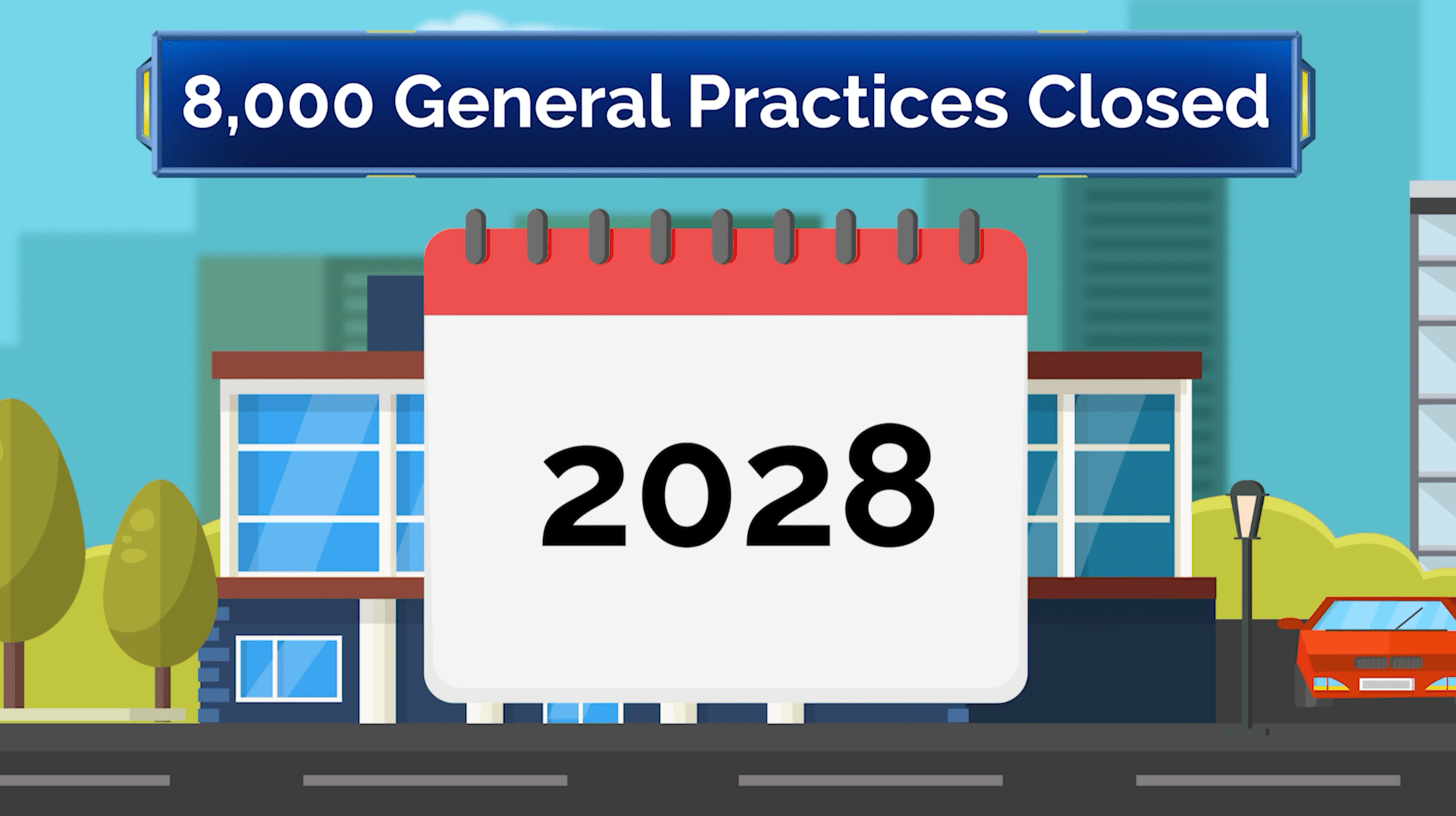
Here’s why: Germany’s healthcare system is facing a chronic doctor shortage, with many physicians warning that working conditions are becoming unbearable. With up to 8,000 general practices expected to close over the next three years and medical students fleeing to other countries for better working conditions, doctors warn that the German healthcare system is at risk of collapse.
Canada comes in second on this list at 45%.
While Canada’s healthcare system still faces shortages and underfunding, its debt relief during residency, integrated mental health support, and universal health coverage create psychological buffers that prevent burnout from evolving into despair.
But note that this is a Canadian national average. The situation is much worse in the French province of Québec, which is facing insane oversight and fines on doctors, think 1984 Big Brother. More on that story over on my Kevin Jubbal, M.D. channel.
And then there’s France.
Remember when I said one country stands out so dramatically from everyone else? This is it.
In France, a country with shorter work weeks and mandatory vacation, doctors report just 36% burnout or depression. That’s a little over one-third compared to Argentina’s over two-thirds.

Even though France faces doctor shortages, like many of the countries covered on this list, and moderate pay compared to the US, its doctors are far less burned out.
So what’s the difference? Let’s take a closer look.
American doctors are arguably more focused on wellness than anyone. US doctors report healthier diets, exercise more, and are constantly self-optimizing compared to those in other countries. Awareness of health is high, yet burnout and depression plague more than half of US doctors.
So, what is France actually doing differently?
Their secret is structural change. French labor law mandates extended vacation—36% of their doctors take more than six weeks off annually. And only 7% take less than 2 weeks of vacation, compared to 32% in the US. In France, shorter workweeks and non-negotiable work-life balance are built into the system, not treated as a personal “perk.” You can’t optimize your way out of 60-hour weeks and crushing debt.

So, you might be thinking, “Can’t the US adopt France’s approach?” The answer, unfortunately, is no. The US burnout problem isn’t an issue that can be solved by a single labor law.
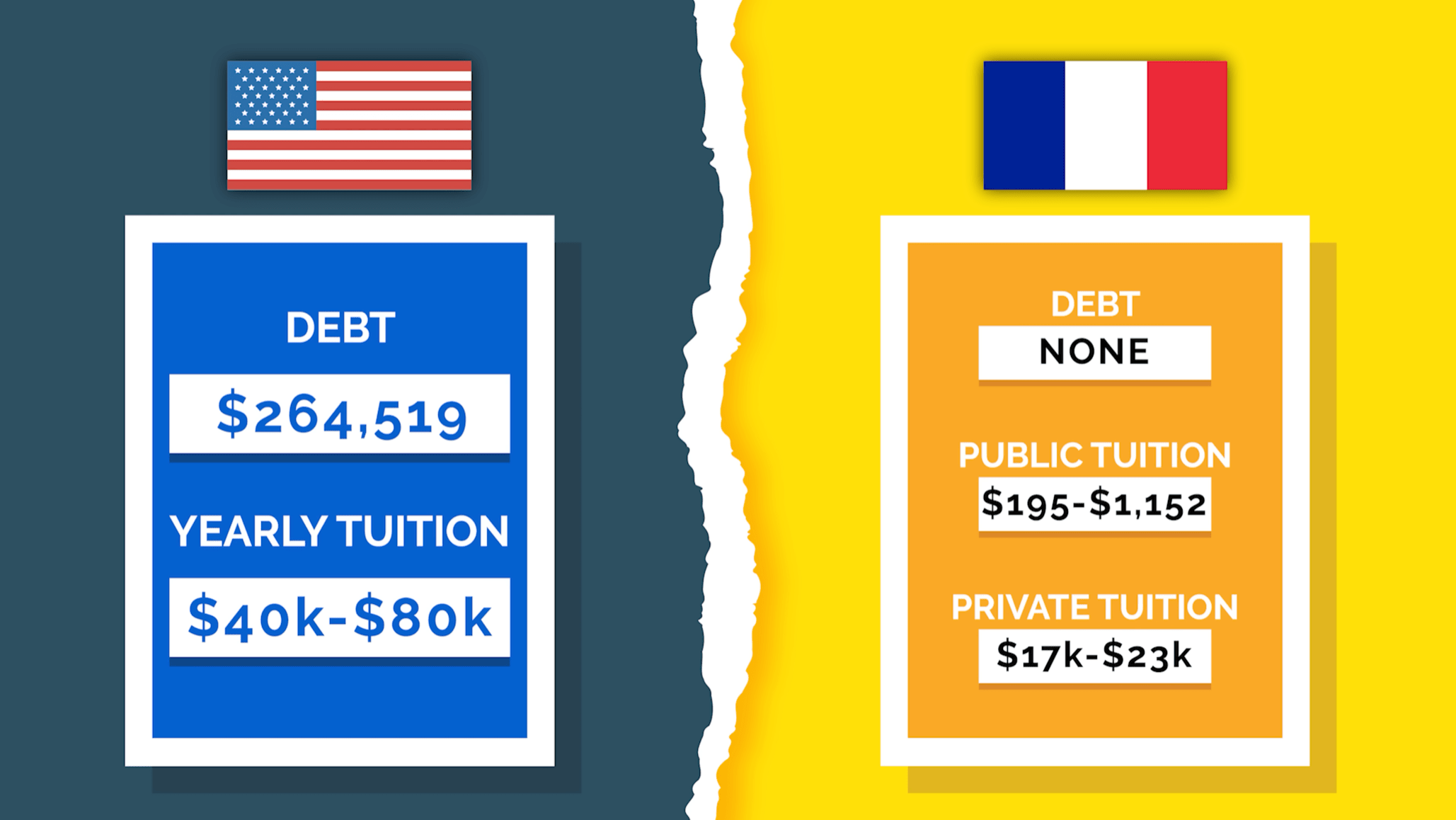
The crisis begins with financial handcuffs. US medical students graduate with an average debt of over $260,000, with yearly tuition costing as much as $80,000 a year. By comparison, French doctors start their careers essentially debt-free, with annual tuition fees ranging from nearly free to €1,000 for public schools and €15,000-20,000 for private.
This debt immediately forces US doctors into high-paying, often high-stress specialties simply to service the loans, regardless of their passion or personal interest.
Then there’s the time trap. Once locked into their careers, US doctors also face an overwhelming workload. And there’s no relief because, despite knowing mental health and wellness are essential, many US doctors take very little time off.
The result is a physician who is high-earning but completely trapped, and long hours prevent recovery or the ability to pursue another career. Meanwhile, public French doctors are limited to a maximum of 48 hours per week and are entitled to a minimum of five weeks of vacation, all while being debt-free.
If moving to France isn’t an option, what can you do?
Control your specialty choice. Determining what career path best aligns with your skills and interests will lead to less burnout. And some specialties have dramatically lower burnout rates than others. Find out which ones in our specialty burnout video below.

Matched and heading into residency? Here’s how to handle your finances, what’s actually worth studying, and how to spend the months before July 1st.

Emergency medicine vs trauma surgery: compare training length, competitiveness, salary, lifestyle, and burnout to decide which path fits you best.




This Post Has 2 Comments
Great inormation
It seems kind of wild that a 36% rate of depression/burnout is seen as great in the medical professional. Thanks for this research, certainly eye opening.