The “Good Advice” That Keeps Premeds Stuck
Much of the advice premeds hear feels reassuring but quietly increases risk. Learn which common tips keep applicants stuck and what to do instead.


Do you already know for certain that you want to become a doctor even though you’re still in high school? Although the path to becoming a board-certified physician is long any which way you slice it, BS/MD and BS/DO programs streamline the time-consuming medical school application process for high-achieving and high-performing high school students who are definite about their desire to dedicate their lives to medicine.
A key aspect of your BS/MD application is your extracurriculars. Your extracurriculars show admissions committees where your interests lie and whether or not you have what it takes to be successful in medical school.
In this post, we break down how to choose your BS/MD extracurricular experiences, how to make the most of them, and the many extracurricular options available.
While it may not feel like it to you, high school is quite an early stage of life to know for sure that you want to dedicate your life to medicine. Popular television shows like House, Grey’s Anatomy, Scrubs, and The Mindy Project paint doctors as wise cracking yet heroic geniuses who still find the time to hook up with just about everyone they pass by in the hospital hallway.
This, of course, is far from the reality of medicine, where long hours, high stress, and the risk of burnout are the name of the game.
Therefore, BS/MD admissions committees want to see that you know what you’re getting into. Do you have any actual experience with medicine, and have you experimented with a broad range of other interests to know that medicine is truly the career path for you?
Non-medical extracurricular experiences illustrate to adcoms that you’ve taken the time to experiment with other career opportunities and future life paths. They want to know that you understand the sacrifice it takes to become a doctor and are not pursuing this path simply because you’ve watched a lot of hospital shows or are being pressured by your parents.
You will have many opportunities to speak about your extracurriculars through supplemental essays as well as during interviews, and how you speak about your activities matters greatly to admissions committees.
Deeply consider your extracurricular experiences. Which ones were you truly committed to? Which provided the most anecdotes? Which were the most personally fulfilling?
If you can’t write an essay about it, it’s not as valuable as you think. Focus on a few things you can delve deep into and speak passionately about.
Don’t do something just for your CV. If you simply jump around between activities as the secretary of this or the treasurer of that without creating a club yourself or making significant innovations, students can find themselves falling short.
It shows when someone is truly passionate and when someone isn’t. Extracurriculars are not just about buffing up your CV. Admissions committees are not looking for cookie-cutter applicants.
If you pursue an extracurricular experience because you’re passionate and committed, it will look much better to adcoms. Starting as early as possible in ninth or tenth grade gives you time to experiment to determine what activities you’re passionate about. Adcoms want to see longitudinal commitment, and you’re far less likely to commit yourself to something and take on a leadership role if you’re not truly invested in it.
Something key to understand here is that not all of your extracurricular activities need to be medical in nature. If you’re passionate about dance or a sport and have earned a leadership role on the team, this is an excellent thing to include.
Med students, residents, and board-certified doctors have lives and hobbies outside of their career; if they don’t, they’ll burn out. Adcoms are looking for well-rounded students with a broad range of interests who will add diversity to their campus—not just students who want to help people and like biology.
Quality experiences are more important than quantity. Being a member of 20 clubs is not as impressive as being the founder of a club or volunteering at the same organization for a full year. Pursue extracurriculars you’re truly passionate about, and once you find something you want to stick with, do so.

Leadership is one of the main things BS/MD admissions committees look for, as by definition, a doctor is the person with the answers. As a doctor, you will be leading teams. You will be the person people come to, whether they be nurses, PAs, medical students, or patients. To be a doctor is to be a leader.
Admissions committees pay close attention to the leadership experience of BS/MD applicants because leadership skills, such as accountability, integrity, adaptability, empathy, and the ability to delegate effectively, are essential to being an effective doctor.
Fortunately, leadership can take many forms. You could found an organization, be the captain of a team, lead a band, or be president of the student council. These are traditional leadership experiences where you’re the one in charge of defining the vision and delegating responsibilities, as well as organizing and leading the team.
What’s most essential is finding something you’re passionate about, as the more dedicated you are to the cause, the more responsibility you’ll take on. You may have to get creative here. If you don’t find an activity or club in an area you’re passionate about, create one. What’s a tangible need in your community, or what are the pain points of your fellow students?
For example, what is your high school currently doing to support the underserved people in your community? Do you feel like your school doesn’t have adequate mental health resources for students?
How could an organization solve these pain points? Founding this kind of organization gets you involved with the students at your school, teachers, administration, and the larger community. It also requires a massive amount of problem solving, decision making, and planning. This kind of experience means a great deal more to adcoms than inheriting the presidency of an existing society.
The people you work with and the connections you make are just as critical as the kind of work you’re doing. So when choosing between extracurriculars, look for a quality mentor who is enthusiastic about guiding you on your journey.
Not only are these potentially lifelong connections that can help you personally and professionally for years to come, but these mentors are also often the people who will write you a strong letter of recommendation.
Letters of recommendation are an essential piece of your BS/MD application. Contrary to your personal statement, where you, as a hopeful teenage premed, attempt to sell yourself to an admissions committee, your letters are written by adult professionals you have worked closely with who can objectively speak to your character and skills.
Adcoms place a great deal of weight on this component, which is why it’s vital that you build strong relationships with extracurricular supervisors. Ensure they have a genuine high opinion of you that will shine through as they write about why they believe you will make an excellent medical student and future doctor.
Even one bland letter of recommendation can throw off an otherwise stellar BS/MD application.
This is a big one. The more kind and helpful you can be, the more people will appreciate you and the more willing they’ll be to answer your questions.
However, it’s also important to stay out of the way and know when you’re needed and when you’re not. This is easier said than done, but do your best to read the room, and always keep in mind that your supervisors are donating their time and energy to show you the ropes.
Always say please and thank you, and always be the first to offer to assist with a task.
Now that we’ve covered how to choose the best extracurriculars for your BS/MD path, let’s briefly discuss some of the most common types of activities.

A major activity admissions committees look for in candidates is clinical experience. They want to know you’ve actually been in a medical setting and know what it’s about. Volunteering in a hospital, medical office, free clinic, or participating in any service-oriented clinical activities is an excellent way to get this kind of experience and show adcoms what your values are.
Now, as a teenage volunteer worker, you will be limited in patient care interactions. Mostly you’ll be showing people around the hospital and handling administrative duties, such as filing and answering the phone. While direct patient interaction is best, this is hard to find at this stage of your medical education and career.
Shadowing physicians is another excellent way to get an authentic feel for what the day-to-day professional life of a doctor is actually like. And the more experiences you can find, the more exposure you’ll have to the many different medical specialties that are out there, such as family medicine, psychiatry, and surgery.
What’s most important is exposing yourself to the day-to-day reality of being a doctor because medicine is not for everyone. It’s long, hard work, where you’ll deal with a great deal of sad cases and difficult family discussions. Delivering heartbreaking news to your patients and their families can be a key aspect of the job, and you, as well as admissions committees, need to know if you can handle it.
Learn more about The Benefits of Shadowing a Doctor & How to Do It Right.

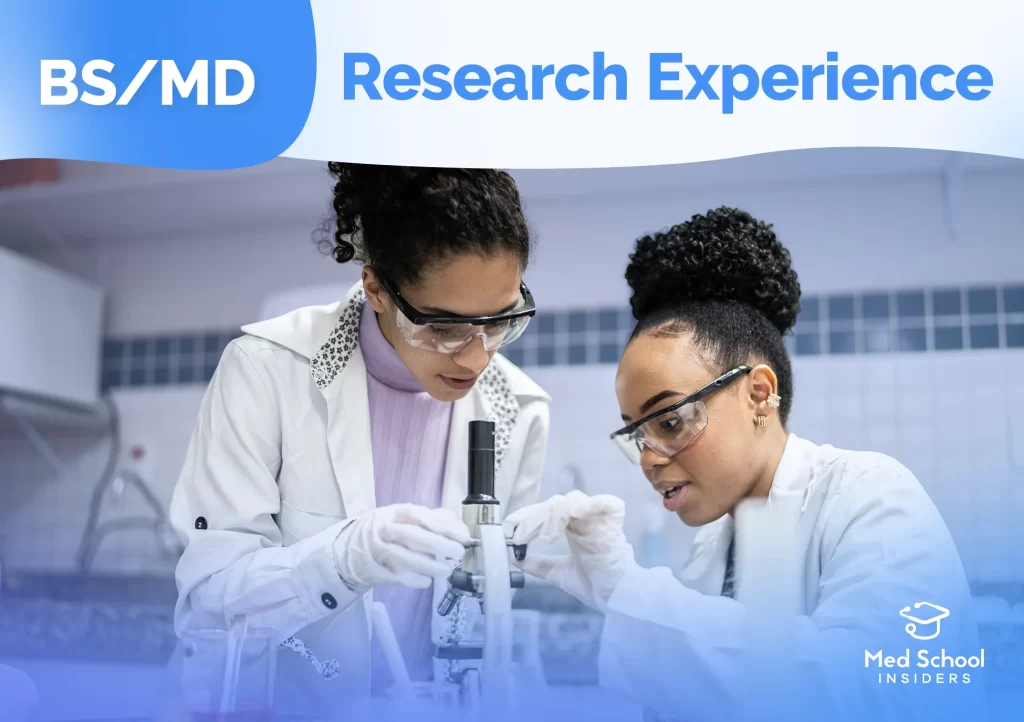
Research is a key piece of medical school, as it’s the foundation of everything that physicians use in medicine, from the drugs to the procedures to the way they advise patients.
Participating in research allows you to see the other side of medicine and provides you with a better understanding of how our current medical practices came to be. It also shows the sheer amount of time, effort, and resources that go into making the drugs you will be prescribing in your future career.
Considering how fundamental research is to medicine, securing some research experience is a must, such as spending a summer in a lab, for example. Research projects are usually affiliated with a university, so there’s more access to these opportunities in urban areas. If, however, you live in a more rural area of the US, you can reach out to investigators with research projects you’re interested in and make the commute.
Learn more with our Summer Research Guide.
Whether urban or rural, cold emails are acceptable. What’s important to remember is that you have nothing to lose and everything to gain. The worst that can happen is someone doesn’t answer or says no. The best that can happen is an unforgettable opportunity.
This is a general principle of extracurriculars in high school—just ask politely and see what happens. If it’s a no, say thank you and move on to the next one. If it’s a yes, say thank you, and then show up every day on your best, most professional behavior.
Since you’re so early in your medical education, it will likely be a lot of watching and listening at first, but any experience with research you have will help you grow as a BS/MD candidate—as long as you’re truly interested in it. Remember, simply checking off boxes is not enough to wow admissions committees.
If you’re just starting out in research, the Med School Insiders Ultimate Premed & Medical Student Research Course will meet you where you are and help you maximize your potential as a more competitive medical school or residency applicant. You’ll learn advanced tactics you won’t find anywhere else because we innovated them—the same tactics that earned the course creators over 60 research items each before graduating medical school.
The course will show you how it’s done step by step so that you not only master research but also learn to enjoy it, too.

Being a physician is an inherently altruistic vocation, which means admissions committees are actively seeking this quality in prospective BS/MD candidates. Donating your time and energy to people and organizations in need illustrates your dedication to helping others.
Consider the needs of your community and the non-profits available in your hometown or city. Do you live in an area with lots of homelessness and poverty? Does your region experience a large number of natural disasters? If you’re interested in travel and global health, is it possible for you to spend a summer abroad with an organization that helps the less fortunate in another part of the world?
Regardless of which volunteering avenue you pursue, be sure to find placements you feel passionate about. If you enjoy what you’re doing and fully believe in the value of the service, it won’t feel like work, which means it won’t matter as much that you’re not being paid. Plus, you’ll be able to speak about the activity in your supplemental essays and during interviews with authentic enthusiasm.
It’s all well and good to say you want to help people in your personal statement. Extracurricular volunteering is where you prove it.
Learn more with our Extracurricular Volunteering Guide.

Demonstrating your aptitude for leadership is essential to earning an acceptance to a BS/MD program, since as we mentioned above, to be a doctor is to be a leader. Some common examples that show off your leadership skills include founding a club, making significant innovations to an existing club, mentoring other students, directing a play, being the captain of a team, or participating in student government.
Remember, the more passionate you feel about the activity, the more you’ll want to be involved, and the more likely you are to take on a leadership role. Simply inheriting a leadership title is not enough. You must be able to speak about the experience with enthusiasm and provide details. What initiatives did you spearhead? How did you specifically contribute to the organization’s success?
Leaders aren’t passive. Seek out opportunities where you feel passionately about making a real difference.
Learn How to Gain Student Leadership Experience.
Pursuing hobbies unrelated to medicine or not directly tied to earning an acceptance to a BS/MD program is not only vital to your mental health but also essential to showing admissions committees that you have a life beyond this major goal.
The road to becoming a doctor is long and full of challenges, and it’s not uncommon for students to become overwhelmed and burn out. You need something in your life that helps you unwind and relax, whether that be music, art, reading, writing, dancing, playing sports, gardening, what have you.
Saying you’re exclusively focused on your one and only goal of becoming a doctor one day won’t impress admissions committees; on the contrary, it will make you seem like more of a risk. Admissions committees look at each student they accept as an investment. A student who doesn’t know how to relax could burn out and end up quitting, which is a total loss for the school.
Carving out personal time to pursue your hobbies now and throughout medical school and your future career is essential to your quality of life. Plus, having a non-medical hobby that you can speak passionately about gives adcoms another window into your personality, and they’re always looking for unique students who will add diversity to their campus.
Learn more: AMCAS Hobbies—What Schools Look For and How to Stand Out.
BS/MD programs are a fast track path for top-performing students who already know they want to go to medical school and become a doctor. But no matter how passionately you feel about medicine, earning acceptance isn’t easy.
Med School Insiders offers strategic advising that pairs you with a physician advisor who can answer your questions about BS/MD programs and the BS/MD application process, what to do with the time between your studies, and much more. It’s our goal to help you create a future that aligns with your vision, which includes your hobbies, studies, career goals, lifestyle, and habits.
Sign up for our newsletter and follow our blog for the latest medical school application news, guides, and resources.

Much of the advice premeds hear feels reassuring but quietly increases risk. Learn which common tips keep applicants stuck and what to do instead.

We break down the lowest-paid medical specialties in 2026, including average salaries, training length, lifestyle tradeoffs, and why compensation varies across fields.