Lowest Paid Medical Specialties in 2026
We break down the lowest-paid medical specialties in 2026, including average salaries, training length, lifestyle tradeoffs, and why compensation varies across fields.


The MCAT is a monumental test comprising four challenging sections. Three of those sections test your knowledge of science and require a great deal of study and memorization. The remaining section—CARS—evaluates your reading comprehension and analytical reasoning, which requires a completely different approach to studying.
An MCAT CARS strategy doesn’t include any memorization. Instead, preparing for CARS requires you to build and continually practice the skills you will be tested on.
We compiled a list of 8 effective CARS strategies to help you prepare for this challenging section of the MCAT.
The Medical College Admissions Test (MCAT) is divided into 4 sections, each worth 132 points for a total perfect MCAT score of 528.
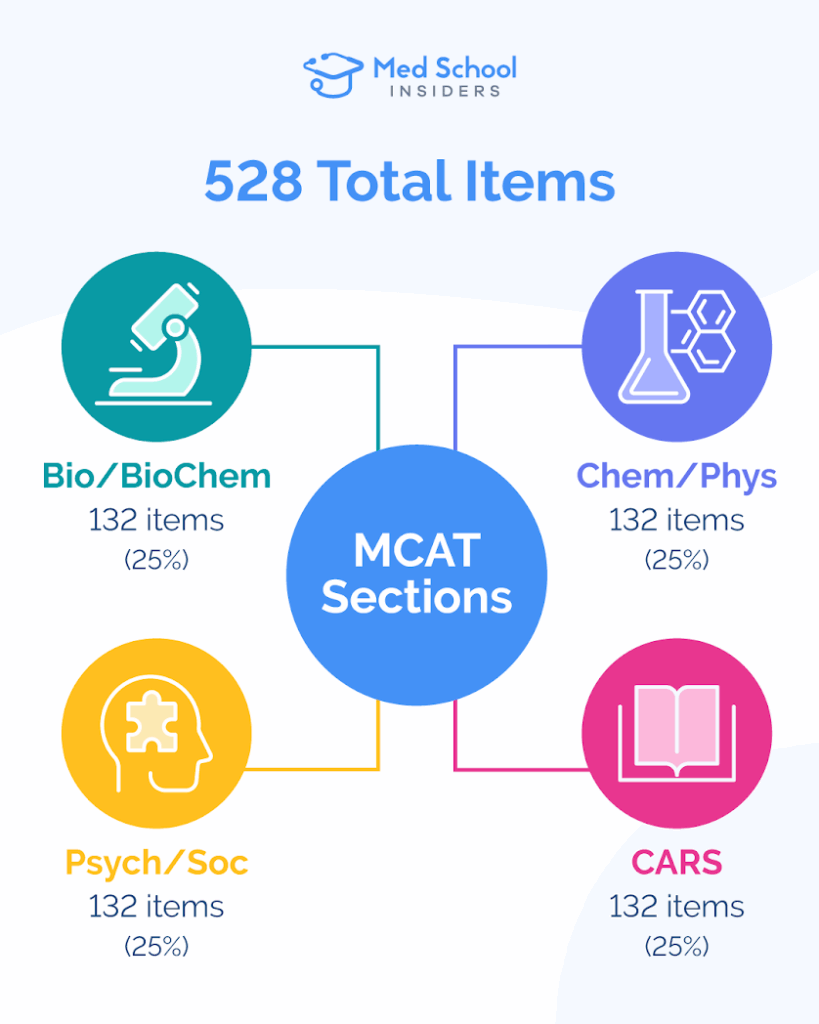
While the CARS section is weighted no differently than the other three sections, it’s often singled out as the most challenging since it evaluates your deduction and reasoning skills and reading comprehension as opposed to your knowledge of science.
Strong analytical skills are just as essential to your success in medical school as your understanding of science. To do well on the CARS section, you need to be able to quickly understand, analyze, and evaluate what you read.
The MCAT CARS section comprises 9 passages, each typically between 500 and 600 words. Each passage has 5-7 questions, for a total of 53.
The section is divided into three categories of critical analysis and reasoning skills, which cover a wide range of topics in the Humanities and Social Sciences. The three categories are Foundations of Comprehension, Reasoning within the Text, and Reasoning Beyond the Text.

The questions in this section evaluate your comprehension of the basic components of the text in the passage. What’s the author trying to say without stating it explicitly? Read between the lines to assess how the author’s choice of words, tone, and rhetorical devices infer the meaning of the passage.
The questions in this section challenge you to evaluate the persuasiveness of the author’s arguments, and it is important to note that your answers should not be based on your opinion. Point to the specific pieces of evidence used in the passage that either most support or detract from the author’s central thesis. Objectively, is the author’s conclusion sensible, or are they biased and making assumptions?
The questions in this section challenge you to take the information and ideas you inferred from the passage and apply them to different contexts and situations, and they may also give you new information that shows the author’s arguments in a different light. How does this new information change or challenge the point the author was trying to make?

Active reading is the opposite of passive reading, such as when we skim an article on our phones or space out, reading paragraphs at a time, when we’re reading for pleasure. When we read passively, we’re not making any personal connections to the text or challenging any of the arguments presented.
Active reading requires us to enthusiastically engage with the text by reading slowly and deeply. If there’s anything you don’t understand, reread it. Don’t move on from confusing sentences or arguments until you fully comprehend them. What’s the deeper meaning of the text? What is the author implying without saying outright?
Active reading trains our brains to connect with and evaluate what we read—an essential skill to sharpen before taking the MCAT. When you read anything, connect it with your own personal experiences and knowledge. Ask questions that probe the deeper implications of the author’s message, and always seek to deduce every key concept, idea, and essential detail to improve your reading comprehension.
Practice reading a passage and then explaining it to someone. Just the act of explaining something to someone else increases our own understanding of it.
Explaining a passage to a child or someone with a less academic background than you is even better. It forces you to simplify the passage and distill only the most important information. What’s the gist of the passage? Which details absolutely have to be conveyed in order for someone to comprehend what the author is trying to say?
If you don’t have anyone nearby, imagine explaining the passage to a child. What’s the quickest, easiest way you can explain the passage that doesn’t leave any important information on the cutting room floor?
Practice summarizing each paragraph into one sentence. As you read, jot down a short, four or five-word summary of each paragraph. By the end of the passage, you should have a list of short sentences that outline everything you just read.
You’re not creating a detailed outline to fall back on for future reference. You’re quickly deducing the central idea of each paragraph to expand your reading comprehension. The act of summarizing forces you to consider the purpose or point of each paragraph, which helps you actively and critically engage with what you’re reading. The more you practice this, the quicker you’ll be able to understand what you read.
Highlighting enables you to pull out key words, phrases, and data to quickly comprehend the central argument or idea of the passage. It’s important to be selective with what you highlight, as highlighting a lot of information is essentially the same as highlighting nothing at all.
Highlighting reduces the time it takes to reread something, which can be a major time suck on the CARS section. Highlight important dates, numbers, and other hard data, names of people, places, or theories, as well as what you believe the central thesis or idea to be.
Remember: practice makes perfect. Don’t be discouraged if you highlight a little too much when you first start out. As you continue to read more passages and discern what’s most important, highlighting will become that much more valuable.
Practicing with less time (1 or 2 minutes less than the normal 10 minutes) will get you used to completing practice passages and questions within a limited time window. By practicing with less time, you’ll see how you perform under pressure, and once you do move back to the full 10 minutes, the time limit will feel like a breeze.
The opposite strategy is useful too. Practice reading passages and responding to questions without the stress of a timer. Take your time and make sure you don’t miss anything. The lack of a timer will reduce your stress and allow you to focus on fully understanding the passage and how the questions relate to it. As you practice, you will naturally be able to comprehend the passages more quickly and can gradually reduce the amount of time allotted.
Reading complicated texts helps build your reading comprehension skills by forcing you to slow down and consider exactly what the words are trying to convey; otherwise, you won’t understand a thing. Pay close attention to each word and the meaning behind it. If you don’t know a word, take the time to look it up to make sure you understand what the author is trying to say.
Literary journals, dense magazine publications, or classic literature are all great options. Are you able to follow what’s going on? Continue this practice as often as possible. The more you read complicated texts, the better you will get at understanding them.
If you’re struggling to fit this practice into your routine, try taking a classic novel with you wherever you go. When you’re waiting for someone, commuting, etc., pull out the book instead of jumping to your phone.
Not sure where to start? The following ideas include magazines, classic literature, and philosophy texts.
Magazines:
Classic Literature:
Philosophy:
Whether you want to be a doctor, a stand-up comedian, a gymnast, or nothing at all, reading is good for you. Reading regularly and for pleasure builds your vocabulary, increases your understanding of other human beings, improves memory function, aids sleep, reduces stress, enhances brain connectivity, and—wait for it—helps with your CARS performance.
Now, you may not like to read. And while you’re perfectly entitled to live whatever life you want, what would you say to a future patient of yours who tells you that they don’t like vegetables and therefore won’t eat them?
Start reading regularly right away. And we don’t mean just your assigned textbooks. Figure out what you like to read, whether that be non-fiction, fantasy and science fiction, detective novels, biographies, what have you. What you choose doesn’t matter so long as you do it regularly. If you enjoy what you’re reading, you’ll want to do it more and actually look forward to sitting down with a good book.
Be intentional with your reading habits by making time for it in your daily schedule. This way, you can turn reading into a habit. While habits are hard to form, they’re just as hard to break, so if you get into the habit of reading, you won’t want to stop anytime soon. This is an especially great thing for med school students, since how often and how deeply you read are directly connected to your performance on the CARS section.
If your reading comprehension is lacking, CARS is going to be a significant and possibly impossible challenge. Start reading as much as you can as soon as possible to give yourself every advantage on the MCAT.
And keep the habit up after the MCAT! Reading regularly and for pleasure will help you craft a stellar personal statement and medical school application, make you a better medical student, and improve your quality of life.
Med School Insiders offers MCAT tutoring—including developing a personalized MCAT CARS strategy—that’s tailored to your unique strengths and weaknesses. We have a diagnostic process that evaluates how you can make the greatest improvements. You’ll be matched with a top-scoring tutor for one-on-one mentorship and relationship building. It’s a custom, one-of-a-kind approach that’s hand-built just for you.
We’re so confident you’ll see great results that we have a score increase guarantee. If your score does not improve, we’ll work with you for another 5 hours free of charge.
The Med School Insiders MCAT Course comes with the industry’s first-ever honest 510 score guarantee, with gold standard content, three full-length and two half-length practice tests, and guidance from those who scored in the 100th percentile. We know you’ll find incredible value in our course, so on top of the 510 score guarantee, we offer a 10-day 100% money-back guarantee. Try it at zero risk.


We break down the lowest-paid medical specialties in 2026, including average salaries, training length, lifestyle tradeoffs, and why compensation varies across fields.
Use our medical school application guide to gain an understanding of the application timeline, what’s included, mistakes to avoid, and what happens next.