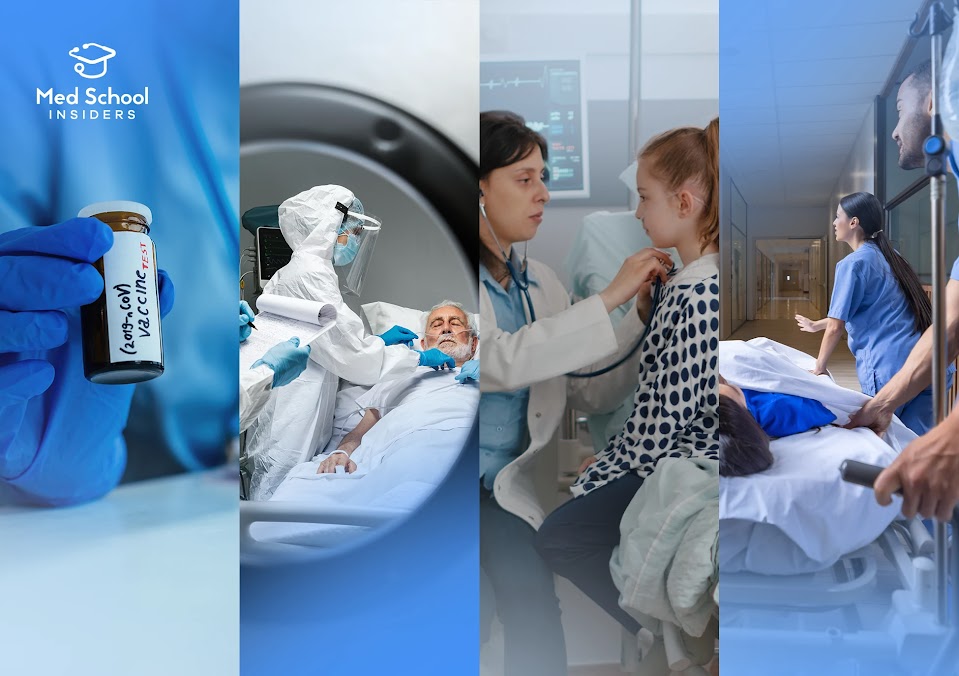
Emergency medicine is often portrayed as fast-paced, chaotic, and unpredictable. While that reputation is well earned, what many premeds and medical students do not realize is that emergency medicine also offers one of the widest and most flexible career landscapes in all of medicine.
While subspecialization is not required to practice emergency medicine, completing a fellowship can help you tailor your career to your interests, lifestyle goals, and long-term vision as a physician.
And you have more options than you might expect.
1 | Emergency Medical Services (EMS)
Emergency Medical Services physicians operate at the systems level, shaping how care is delivered before patients ever arrive at the hospital.
EMS physicians often serve as medical directors for ambulance services, fire departments, or air medical programs. They develop protocols, oversee quality improvement, and make high-stakes decisions such as when a patient should be airlifted versus transported by ground.
Most EMS physicians split their time between clinical emergency department shifts and administrative or leadership roles. If you enjoy big-picture thinking, leadership, and optimizing systems rather than focusing solely on individual patient encounters, EMS may be a strong fit.
2 | Medical Toxicology
Medical toxicology is one of the most investigative subspecialties in medicine.
When a patient presents with an unknown ingestion, overdose, or exposure, toxicologists are the experts called upon to identify the toxidrome, guide antidote use, and manage complex physiologic effects across multiple organ systems.
Toxicologists commonly work at academic medical centers or regional poison control centers. Their work spans both acute overdoses and chronic poisonings, making this field ideal for physicians who enjoy diagnostic reasoning and high-stakes problem solving.
3 | Pediatric Emergency Medicine
Pediatric emergency medicine is its own distinct world.
Children are not simply smaller adults. Their physiology, medication dosing, airway anatomy, and disease presentations all differ, and the emotional stakes are often higher due to family involvement.
Most pediatric emergency physicians practice in children’s hospitals or pediatric emergency departments. The case mix ranges from common illnesses to life-threatening emergencies, requiring both technical skill and emotional resilience.
4 | Sports Medicine
Sports medicine offers a markedly different lifestyle from traditional emergency medicine.
Emergency medicine physicians with sports medicine training may provide sideline coverage, manage musculoskeletal injuries in clinic, and work with athletes at every level, from youth sports to professional teams.
Many sports medicine physicians enjoy more predictable schedules, fewer overnight shifts, and a blend of clinical and event-based work. For those seeking better work-life balance while staying clinically engaged, sports medicine can be an appealing option.
5 | Critical Care Medicine
Critical care medicine allows emergency physicians to extend their resuscitation expertise beyond the emergency department and into the intensive care unit.
EM-trained intensivists manage ventilators, titrate vasopressors, and lead complex resuscitations. Fellowship pathways include anesthesiology critical care, internal medicine critical care, neurocritical care, and surgical critical care.
Despite the intensity of ICU work, many intensivists enjoy structured schedules such as week-on, week-off models, which can provide meaningful time away from work.
6 | Pain Medicine
Pain medicine offers a shift away from the unpredictability of emergency department work.
Pain medicine physicians focus on both acute and chronic pain management, often in outpatient or interventional settings. Schedules tend to be more predictable, and the field continues to grow as healthcare systems increasingly recognize pain management as a specialized discipline.
For emergency physicians seeking greater control over their schedules while maintaining clinical impact, pain medicine is worth considering.
Before continuing, it is worth pausing to reflect: Is emergency medicine the right specialty for you?
If you’re unsure, looking for more options, or trying to decide between two specialties, check out specialtyquiz.com. It asks you questions about your preferences, priorities, and how you’d handle hypothetical scenarios, and matches you to specialties based on 9 personality traits. Once you know EM is your path, these subspecialties become the next major decision.
7 | Undersea & Hyperbaric Medicine
Undersea and hyperbaric medicine is one of the most unique subspecialties in medicine.
Physicians in this field treat conditions related to pressure changes, including decompression sickness, carbon monoxide poisoning, radiation injuries, and non-healing wounds using hyperbaric oxygen therapy.
Most work in medical centers with dedicated hyperbaric facilities. If you are fascinated by physiology at the extremes, this niche field offers experiences few other specialties can match.
8 | Hospice and Palliative Medicine
Hospice and palliative medicine focuses on comfort, dignity, and quality of life for patients with serious or life-limiting illnesses.
Emergency physicians who pursue this path often bring a unique skill set to end-of-life care, helping manage symptoms while supporting patients and families through difficult decisions.
For those who value communication, compassion, and holistic care, palliative medicine can be deeply meaningful work.
9 | Wilderness Medicine
Wilderness medicine prepares physicians to deliver care in remote, resource-limited environments.
Training includes management of trauma, altitude illness, hypothermia, envenomations, and other emergencies far from traditional medical facilities. Some physicians work with search and rescue teams, expedition groups, or disaster response organizations, while others integrate wilderness principles into academic or clinical roles.
This path appeals to those who enjoy adaptability, outdoor environments, and unconventional practice settings.
Other Subspecialty Paths Worth Knowing
Beyond these core options, emergency medicine offers additional fellowship opportunities, including:
-
Ultrasound (POCUS): Focused on bedside imaging, education, and diagnostic leadership
-
Addiction Medicine: Comprehensive care for patients with substance use disorders
-
Brain Injury Medicine: Rehabilitation and recovery following traumatic brain injury
-
Disaster and Tactical Medicine: Preparedness for mass-casualty events and high-risk operations
-
Medical Education and Simulation: Training the next generation of emergency physicians
-
Forensic Emergency Medicine: Intersection of medicine, law, and legal documentation
-
Clinical Informatics: Optimization of electronic health records and healthcare IT systems
Emerging and Niche Options
Emergency medicine continues to evolve, with emerging paths such as:
-
International Emergency Medicine
-
Pediatric Ultrasound
-
Telemedicine and Virtual Emergency Care
-
Women’s Health
-
Aerospace Medicine
-
Occupational and Environmental Health
Emergency medicine is one of the few specialties that allows physicians to continually reshape their careers. Whether you thrive on leadership, education, systems design, niche expertise, or lifestyle flexibility, there is likely a subspecialty that aligns with how you want to practice medicine.
Exploring these paths early can help you build a career that is not only sustainable but also deeply fulfilling.